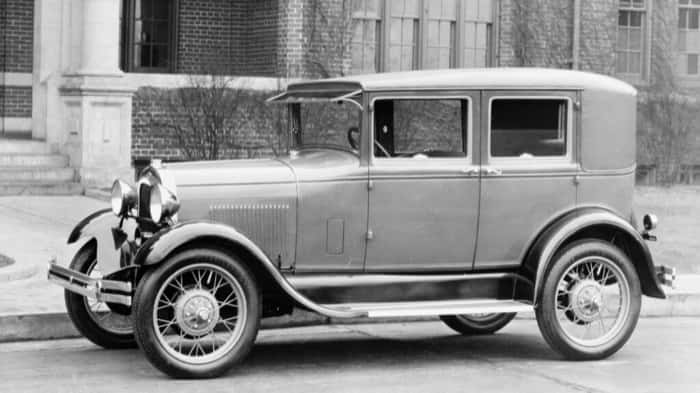
While the 1920s are often remembered for their legendary party culture, there was far more going on beneath the surface. The decade earned its "roaring" reputation in large part because the United States was discovering the full force of its industrial potential. New industries sprang to life, fresh products flooded the market, and the American economy surged. Among all these developments, few proved as transformative or far-reaching as the automobile.
Henry Ford and The Model A
By the close of the decade, Henry Ford had amassed millions of dollars, thanks to his mastery of efficient automobile production line techniques. Back in 1908, the Model A had entered production as an affordable, universal car designed for everyday Americans. What followed was over a decade of market dominance, with Model As increasingly appearing in home driveways across the country. Then, in 1927, a special ceremony marked the end of an era — the 15 millionth and final Model A rolled off the line, bringing Ford's Dominance to a close.
The Model T Enters The Scene
After shutting down the production line for six months, Ford at last unveiled the Model T to an eager army of middle-class consumers. That momentous day came on December 2, 1927, and it wasn't long before rival car makers took Ford's cue and launched their own brands. Most auto manufacturers of the era were building expensive vehicles one at a time, catering exclusively to wealthy buyers willing to wait. These formative years of the automobile industry would play a crucial role in propelling the United States toward becoming an industrial superpower.
The Auto Industry Expands
For nearly 20 years, Ford reigned supreme in auto manufacturing while competitors scrambled to catch up. By the mid-20s, however, other auto manufacturers were beginning to seriously challenge Ford's top spot. The Model T had grown dated by that point and no longer satisfied the needs of most Americans shopping for cars. Automobile technology had improved rapidly, with rival manufacturers embracing newer technology that left Ford behind. Ultimately, Ford responded by acquiring several of those earlier luxury car brands, including Lincoln and Mercury.