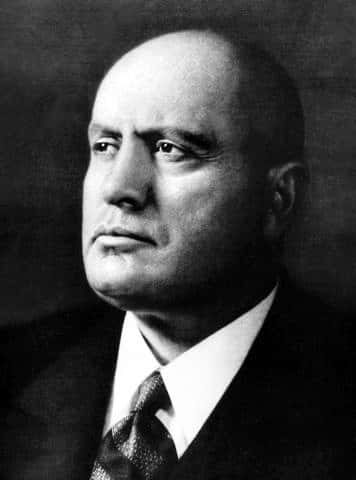
Long before the Second World War redrew the map of Europe, the First World War had already unleashed staggering destruction across the continent. The sheer scale of loss was so profoundly shocking to both civilians and those who served that the conflict earned grim nicknames — the Great War, the war to end all wars. With the signing of the Treaty of Versailles and the conclusion of WWI, many held onto the hope that lasting peace would follow for generations to come.
What governments and ordinary people across Europe failed to grasp, though, was that figures like Benito Mussolini and Adolf Hitler had been young soldiers fighting on the losing side of that very conflict. In the years that followed, both men would carry fascist ideology into their respective nations — Italy and Germany — methodically working within existing political systems to seize control from the inside.
Mussolini's Strategic Position
After WWI, Benito Mussolini's return to Italy marked the beginning of a political rise fueled by fiery rhetoric and open criticism of the Italian government. His National Fascist Party steadily gained influence, and Mussolini found himself perfectly positioned as social unrest spilled into the streets, with local paramilitary groups and street gangs vying for dominance. By 1921, he had risen to lead his party as it methodically tightened its grip on power.
A Fascist Dictator Emerges
By January 3, 1925, Benito Mussolini had amassed sufficient authority to dissolve the Italian Parliament entirely and install himself as the country's supreme ruler.
A key engine of fascist ideology has always been social turmoil, especially when it grips the younger generation. Even as Mussolini settled into his new role as dictator, the deep-rooted unrest that had preceded WWI continued to fester — not just in Italy, but across the continent.
Under Mussolini's rule, Italian authorities established the Squadristi (Blackshirts) as a tool to enforce obedience and suppress dissent. Yet, much like Germany and Japan, Italy was ultimately forced to surrender at the close of WW2, bringing Mussolini's grip on power to a definitive end.