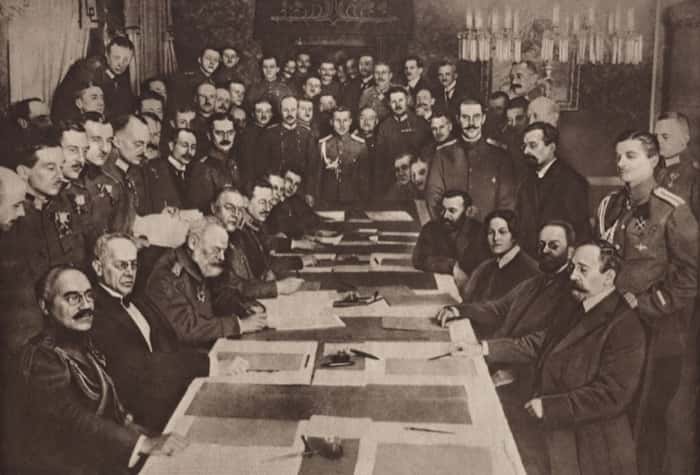
On June 28, 1919, at the Palace of Versailles, world leaders put pen to paper on the Treaty of Versailles — a document that formally brought the five-year conflict of World War I to a close.
What had ignited this devastating global war? It traces back to July 28, 1914, when the assassination of Austrian Archduke Franz Ferdinand set off a chain reaction of hostilities. By the time the dust settled, entire empires had collapsed and a wave of new nation-states had emerged. The war's consequences rippled far beyond the battlefield, fundamentally reshaping the political, cultural, economic, and social landscape across Eurasia, Africa, and even regions not directly caught up in the fighting.
Beyond ending the war, the Treaty carried another ambitious promise: the creation of the League of Nations, an organization charged with mediating international conflicts and cultivating lasting peace.
Many regard the League of Nations as the forerunner to the United Nations. Born out of the ashes of World War I, its core mission was to offer a diplomatic arena where international disputes could be worked out before spiraling into full-scale warfare. The League held its first council meeting on January 16, 1920, and established its headquarters in Geneva, Switzerland.
Tragically, the League lacked any military force of its own and struggled to enforce its resolutions and economic sanctions. Its effectiveness hinged on the participation of the Great Powers, most of whom proved reluctant to fully commit. The consequence was devastating — just two decades later, the world found itself engulfed in WWII.