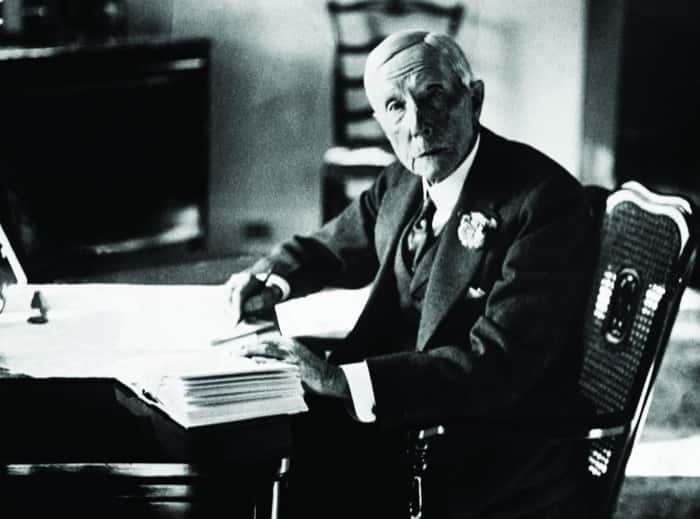
On September 29, 1916, John D. Rockefeller (1839-1937) made history as the first person in the United States of America to reach billionaire status, thanks to his ownership of Standard Oil. Remarkably, his total net worth on this day represented 2% of the USA's GDP. What makes his story especially compelling is that this staggering accumulation of wealth went hand in hand with a deep commitment to charity and philanthropy.
Rockefeller's generous spirit showed itself early. At just 16, while working his first job as an assistant bookkeeper with Hewitt & Tuttle, he was already giving away 6% of his income to charity — a figure that climbed to 10% by the time he turned 20. That said, not everything about his rise was universally admired. Many of the business practices he employed through Standard Oil drew sharp criticism for being predatory, unethical and anti-competitive. Ultimately, in 1911, the Supreme Court of the United States ruled that his company had violated antitrust laws and ordered its dissolution. Nevertheless, his enduring reputation as one of the wealthiest and most philanthropic Americans persists into the present day.
Even after the court-ordered breakup, the remaining Standard Oil enterprise continued to thrive. By 1916, stock prices had surged so dramatically that Rockefeller's fortune crossed the $1 billion mark. Shares were trading at more than $2,000 apiece — a breathtaking jump from the previous peak in American history of $750 a share, whose limits had been dictated by the Supreme Court. At these valuations, Standard Oil's market cap reached $2 billion.
What made this meteoric rise all the more extraordinary was that it followed a slump in share prices during August, when crude oil prices had been reduced — making it one of the most remarkable leaps in American corporate history.
By September 29, the explosive growth in the oil industry was being fueled by the country's increased innovation around harnessing this natural resource to propel the country into modernity.