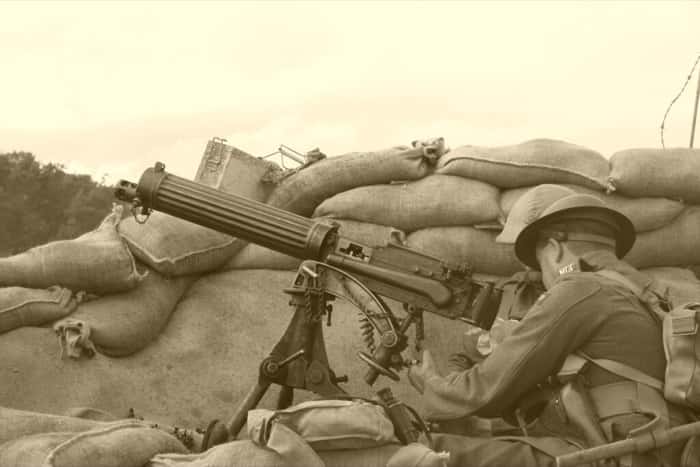
On this day in history, the German Empire launched its invasion of Belgium and France, setting World War I into motion. The conflict would ultimately come to an end in 1918.
August 3 holds a significant place in history as the date that World War I effectively began. Germany's invasion of Belgium and France on August 3, 1914, triggered Britain's declaration of war against Germany. Britain then launched an invasion of Germany in an effort to halt their advance, but this effort proved unsuccessful. Germany proceeded to invade France a second time, pushing forward rapidly. By 1917, both Germany and Austria-Hungary had started to fracture from within. Ultimately, the Hapsburg Empire emerged on the losing side of the war.
The reason Germany stormed into Belgium on August 3 traces back to a military strategy the Germans had devised in 1914 to eliminate their adversaries. Known as the Schlieffen Plan, the strategy ultimately fell short of expectations, largely due to a revolutionary new weapon — the tank — which hampered the progress of German troops and bought precious time for British forces to arrive.
Below you'll find additional details about August 3, 1914 — Germany invades Belgium and declares war on France, kickstarting WW1
More Facts
- The First World War, also known as the Great War, was set in motion on this day, in 1914, as Germany marched into France by way of neutral Belgium.
- Kaiser Wilhelm II was the German leader during this period.
- Marshal Joseph Joffre, the French leader at the time, issued repeated warnings to Germany not to violate Belgian neutrality, though Kaiser Wilhelm II disregarded every one of them.
- On August 2, 1914, German Empire military forces crossed into Belgian territory and launched an attack on France, violating that nation's neutrality in the process.
- Belgium fell under partial occupation, and King Albert I was forced into exile. That same day, Britain declared war on Germany and set about mobilizing its Army.
- In the early hours of August 4, the British ultimatum directed at Germany ran out, and within two hours, Britain officially declared war on Germany.
- On August 6, a pair of German army corps pushed into neutral Luxembourg, seizing control of the Grand Duchy.
- That same day saw German soldiers cross into the neutral Netherlands as well.
- By 1914, German forces had swept through the majority of Belgium and northern France.
- Belgian resistance came to a close on August 22, when King Albert I surrendered in Brussels.