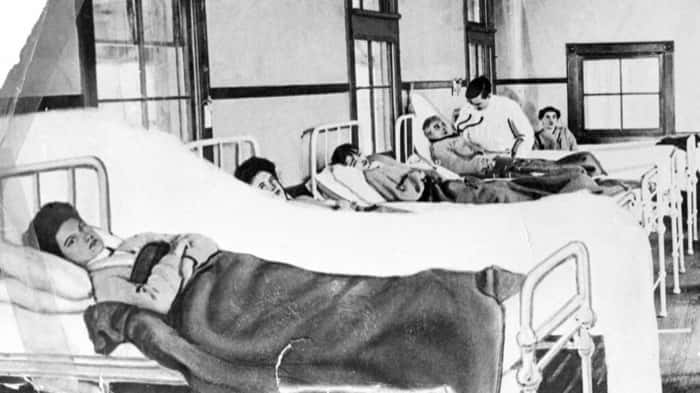
When Public Health Collided with Personal Freedom: Mary Mallon's Release from Quarantine
February 19th, 1910, marked a watershed moment in the annals of public health. On that day, Mary Mallon — infamously dubbed "Typhoid Mary" for her connection to multiple typhoid fever outbreaks across New York City — walked free after enduring her first stretch of forced quarantine. The decision ignited fierce debate over where to draw the line between individual liberty and the safety of the public, and it would go on to reshape the field of epidemiology by ushering in novel approaches to fighting disease.
An Irish immigrant by birth, Mallon had made her living as a cook, preparing meals for several families in the area. Then, in 1907, health officials noticed something alarming: six people she had cooked for had contracted typhoid fever, even though none of them had visited any locations where the disease was known to exist. An investigation was launched to identify the source. After months of pursuit, Mallon was finally captured and transported to North Brother Island — a small island situated off the coast of NYC that served primarily as a place of confinement for people carrying infectious diseases considered too dangerous for them to remain among the general population.
Quarantine: The Only Option
Mallon pushed back hard against the charges leveled at her, insisting she had done absolutely nothing wrong, and she seized every opportunity to attempt an escape from her quarantine. Her defiance led to heightened surveillance and a series of court proceedings that culminated in an indefinite detention order, cutting off all contact from the island.
Yet after three grueling years confined on North Brother Island, Mallon's fortunes shifted unexpectedly when the decision was made that she had to be set free. Predictably, health professionals were deeply unsettled by this development. Their concern was straightforward: releasing her back into the community without additional safeguards posed a genuine risk, especially given that she herself had never displayed any signs or symptoms of typhoid fever throughout her years of isolation.
From Defiance to Close Surveillance
Following this surprising turn of events, authorities kept a tight watch on Mallon. She was subjected to routine checkups conducted by officials specifically designated to oversee her case. This monitoring continued until 1932, when those officials ultimately obtained authorization from their superiors to limit access to and from particular establishments where evidence had surfaced tying Mallon to previous problems. Her management also involved near-daily injections of arsenic compounds, which were believed to help suppress active infections. These treatments, however, proved futile — additional outbreaks continued to surface in the wake of her release.
A Lasting and Complicated Legacy
For all the turmoil and the dark shadow cast over her name, it's impossible to deny the impact Mary Mallon had on our understanding of infectious diseases. Her story introduced groundbreaking concepts about eliminating potential transmission networks through isolation and about tracking how diseases ripple through entire populations. Even now, professors in disciplines like epidemiology make a point of teaching their students about Typhoid Mary. Some have taken it a step further, commemorating her legacy through annual awards presented at conferences devoted exclusively to tuberculosis research — a powerful reminder that even our most divisive historical figures can ultimately leave behind contributions that endure for the better!