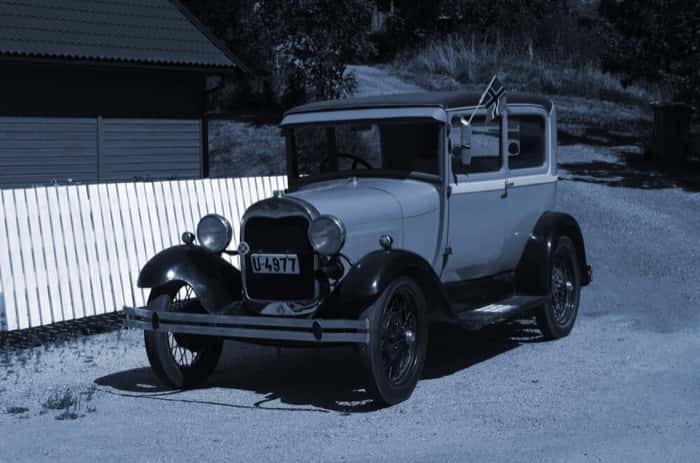
On August 12, 1908, the first Model T car rolled out of the Henry Ford company. What emerged that day was the culmination of a lengthy and painstaking inventive process — one that would ultimately produce one of the most legendary automobiles ever made. For many, this moment marks the spark that ignited America's enduring romance with the car.
Affordability was at the heart of the Model T's appeal, making it a practical choice for everyday travel. Adding to its accessibility was an innovative 3-speed planetary gear system, which gave drivers far greater ease of handling and control behind the wheel.
The car proved to be a massive commercial hit, and it is widely recognized today as the first vehicle to be mass-produced.
What truly distinguished the Model T from rival vehicles was its impressive array of features. It was the first car equipped with both a tachometer and an odometer. On top of that, its gasoline tank was built directly into the frame — a notable departure from earlier automobiles, which depended on a removable gas can stored underneath.
With each new model that came along, the Model T underwent continuous upgrades and refinements throughout its production life. Although numerous other companies would eventually center their business strategies around making cars affordable, Ford had already blazed that trail before any of them.
As a revolutionary automobile, the Ford Model T catapulted Henry Ford into global recognition as an entrepreneur. It swiftly rose to become the most successful car in history, fueling surging sales and establishing a benchmark that newer automobiles would strive to meet.
In May 1927, production of Henry Ford's Model T car finally came to a close.