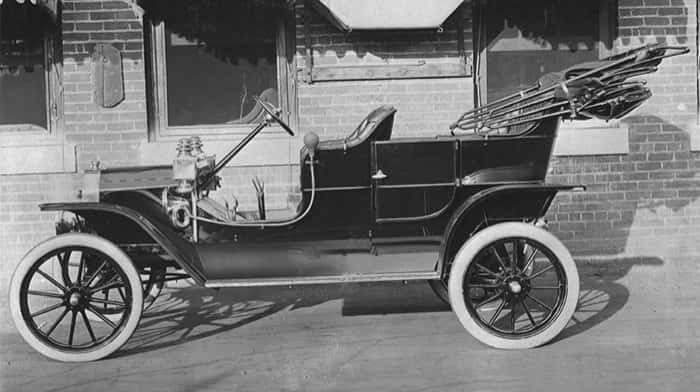
What made the Model T such a game-changer in automotive history? As one of the earliest cars to reach everyday consumers on a massive scale, it didn't just transform the auto industry — it reshaped American life in ways few could have predicted. Let's explore how Ford pulled it off and the ripple effects it created.
The Model T and Its Beginnings
When the Ford Motor Company was established in 1903, Ford had a bold vision: anyone earning a reasonable living should be able to experience the advantages of owning an automobile. With that goal driving him forward, he assembled a team of engineers and began crafting vehicles equipped with features that we now take for granted. Among the most significant innovations they embraced was incorporating interchangeable parts into the production process — a concept that would prove revolutionary.
The Model T and the Modern Assembly Line
Once the Model T hit the market in 1908, it quickly rose to become one of the most ubiquitous vehicles not just in America but across the globe. Two forces fueled this remarkable success: Ford's unwavering commitment to making cars affordable and the company's adoption of a production method that was largely unheard of at the time — the assembly line. Because the Model T was designed to be comparatively modular, relying on interchangeable parts, the time and effort required to build each automobile dropped dramatically. This slashed labor costs and accelerated the pace at which cars rolled off the production floor. The company continued honing these techniques over the years, and by 1914, they were manufacturing more vehicles than every other automotive company combined.
The Versatility of the Model T
Beyond affordability, the Model T owed much of its widespread popularity to sheer versatility. Ford designed it during an era before roads and highways were commonplace, so the vehicle needed to handle a wide range of terrain — and it delivered. Shallow water, mud, and hills posed little challenge. But transportation was only part of the story. The Model T found itself frequently repurposed for entirely different functions, with its conversion into a tractor being perhaps the most notable. Numerous companies built thriving businesses around selling conversion kits that included heavy-duty rear ends and wheels, transforming the car into a viable piece of farm equipment. Beyond that, owners used the wheel to power a conveyor belt, operate a thresher, or even serve as a makeshift generator. Some of the more creative adaptations were truly remarkable — the Model T was turned into an armored car, its engine found its way into homemade planes, and resourceful owners fitted skis to the front to navigate heavy snowfall.