On June 30, 1908, something extraordinary occurred in a remote stretch of Siberia — and to this day, nobody can say with certainty what it was. What we do know is that a staggering force leveled roughly 80 million trees in the vicinity of the Stony Tunguska River, producing a sound powerful enough to be heard miles away. Dubbed the Tunguska Event, this mysterious occurrence has fascinated scientists, meteorologists, and conspiracy theorists in equal measure.
Here's what observers reported: shortly after 7:00 in the morning, both indigenous Evenki and Russian settlers in the region spotted a column of bluish light streaking across the sky, which they described as being as bright as the Sun. Approximately ten minutes later, an extraordinarily bright flash erupted, accompanied by a thunderous noise that witnesses likened to heavy artillery fire or a giant fireball.
So powerful was the resulting shock wave that it shattered windows in buildings hundreds of kilometers from the blast. Seismic instruments picked up the disturbance as far away as Washington, D.C. and the United Kingdom, and the event itself was estimated to register at a 5 on the Richter earthquake scale — though it wasn't actually a true earthquake. Perhaps strangest of all, the night sky over northern Europe and Asia glowed brilliantly in the aftermath. Photographs reported to have been taken at midnight came out looking as though they had been shot in broad daylight.
When seismologists and geologists tracked the source of the disturbance to the Tunguska River, they hurried to investigate, fully expecting to find some kind of impact crater left by a crashed meteor or comet. What they discovered instead left them utterly stunned: 830 square miles of forest had been completely demolished, yet there was no crater anywhere to be found. Whatever unleashed this devastation had done so entirely above ground.
Naturally, theories proliferated — some grounded in science, others far more fanciful. Proposals ranged from the somewhat plausible idea that a massive plume of natural gas had spontaneously ignited, all the way to the claim that Nikola Tesla had been testing a superweapon of some sort. Aliens, black holes, and even time travel have all been put forward as explanations over the years. That said, the scientific consensus has ultimately coalesced around the comet theory.
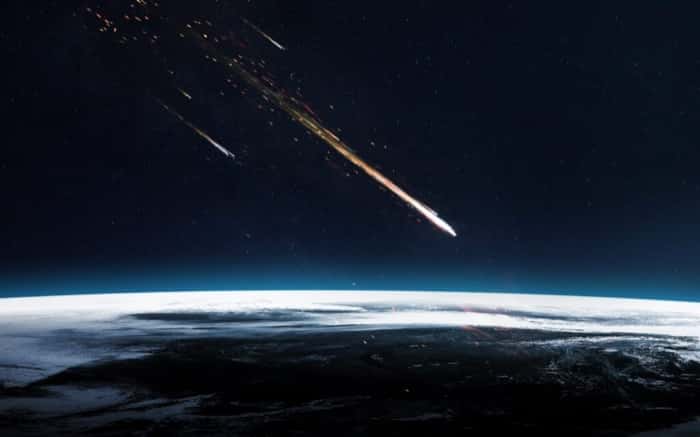
A comet is essentially a mixture of space dust, ice, and frozen gasses. In the frigid vacuum of space, volatile substances like hydrogen, methane, and nitrogen freeze with ease. Upon entering Earth's atmosphere, though, those frozen gasses would have begun to melt. Depending on the chemical makeup of the space dust, the friction produced during the descent through the atmosphere could have been sufficient to spontaneously ignite these gasses before the comet ever reached the ground. An explosion of this nature would neatly account for the various phenomena witnesses observed, as well as the puzzling absence of any impact crater or space rocks.
One intriguing twist on the comet theory centers on a nearby body of water called Lake Cheko. The scientists behind this hypothesis don't dispute that the explosion took place above ground — rather, they suggest the comet detonated directly above the lake. If so, any physical remnants would lie beneath the water's surface and have probably rusted away by now. It's worth noting, however, that geological surveys of the Tunguska forest have uncovered trace elements believed to have originated in outer space.
Whatever the true explanation may be, the Tunguska Event remains a source of endless fascination, making frequent appearances throughout popular culture.