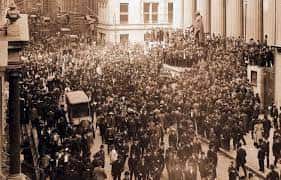
Prior to 1907, The Knickerbocker Trust Company's headquarters occupied a stately presence in Midtown Manhattan. For 23 years, the trust company had projected an image of unshakable stability. But everything unraveled on the morning of Tuesday, October 22, 1907, as a wave of bankruptcies swept through businesses, state banks, and local banks, plunging the U.S. into an economic downtown.
How It Happened
What set this catastrophe in motion was a botched scheme to corner the market on United Copper Company's traded stocks. When the bid fell apart, it triggered runs on banks that had extended loans to trusts involved in the cornering plot. Compared to 1906's figures, the New York Stock Exchange's stock price plummeted by 50%. The resulting panic sent depositors flooding into trust companies and banks, desperate to withdraw their funds.
Shock waves rippled outward to affiliated trusts and banks. Confidence among depositors evaporated as many New York City banks pulled back from the market, draining market liquidity in the process. The Knickerbocker Trust Company was among the casualties — after paying out approximately 8 million dollars to its depositors, the institution closed its doors and would not reopen until March 1908.
Another Trust Bites The Dust
Just a week later, the third-largest Trust in New York City went under, sending waves of fear cascading through the city's remaining trusts. The crisis spilled well beyond New York as regional banks began pulling their reserves out of the city's banks. This landmark financial crisis raged on for three weeks and is remembered as the force that turned the 1907 recession into a full-blown contraction.
The Aftermath
Making matters worse, this panic struck while the United States was already mired in an economic recession. Yet the situation could have been far more devastating were it not for financier J.P. Morgan, who stepped in with large sums of money to stabilize the banking system and keep the panic from spiraling further. The fallout from this global financial crisis ultimately spurred monetary reforms, most notably the establishment of the Federal Reserve System in 1913.
Economists believe that the repercussion of the resulting contraction led to a severity close to that caused the Great Depression.