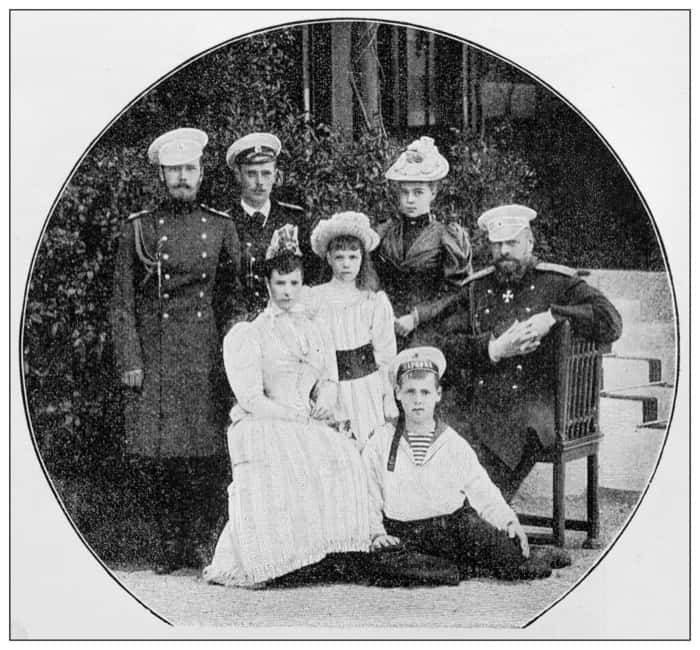
Russia's defeat at the hands of Japan sent shockwaves through the country, fueling revolutionary fervor among a working class already struggling under the weight of that humiliation. On January 29, 1905, Tsar Nicholas II of Russia introduced a package of reforms designed to improve conditions for workers. While these measures managed to suppress the revolts of 1905, they ultimately paved the way for the far more consequential October Revolution of 1917.
The Backstory
A mere seven days before the reforms of January 29, 1905, a priest-led procession of workers made its way to the Tsar's palace with a clear demand: better working conditions. Importantly, the demonstrators harbored no hostility toward the Tsar himself. What they wanted was for him to wield his authority on behalf of a nation built upon the labor of underpaid workers and the sacrifices of disgraced soldiers.
The Tsar's response, however, was far from sympathetic. Tsar Nicholas II directed the Imperial Army to fire into the crowd. The violence claimed the lives of a hundred people and left even more wounded — an event that would become known as "Bloody Sunday."
The Reforms
Bloody Sunday, predictably, ignited a wave of protests across the country. Tsar Nicholas answered with several significant reforms. Chief among them was the October Manifesto, which introduced a multi-party system along with a Russian Constitution. He further created the State Dulma — sometimes called the Imperial Dulma — serving as a lower Senate house within the Russian Empire, while the State Council functioned as the upper house.
The underlying concept was straightforward: build a framework of checks and balances that gave ordinary people a meaningful voice. In reality, though, the Tsar blocked any genuine progress from taking root. Tsar Nicholas II not only refused to appoint a prime minister but also neglected to establish a Constitutional Assembly or grant the country's parliament actual legislative authority.
Put simply, these reforms dangled impressive promises that never materialized into action.
The Public's Response
Much to Tsar Nicholas II's frustration, the populace erupted in what history now calls the First Russian Revolution. This sweeping tide of social and political upheaval targeted both the noble ruling class and the Tsar personally.
Strikes, military mutinies, and peasant uprisings consumed the nation. Though revolutionaries still represented a minority at that point, their ranks were steadily expanding. Years later, Vladimir Lenin would characterize this as the Revolution of 1905, calling it a dress rehearsal for the far greater October Revolution in 1917.
Quick Facts:
- The 1905 revolutions were fueled by the international humiliation at the Russo-Japanese war, which Russia woefully lost.
- Luckily, Tsar Nicholas II survived the 1905 revolutions, but history would not repeat itself twelve years later when the Tsar was executed.