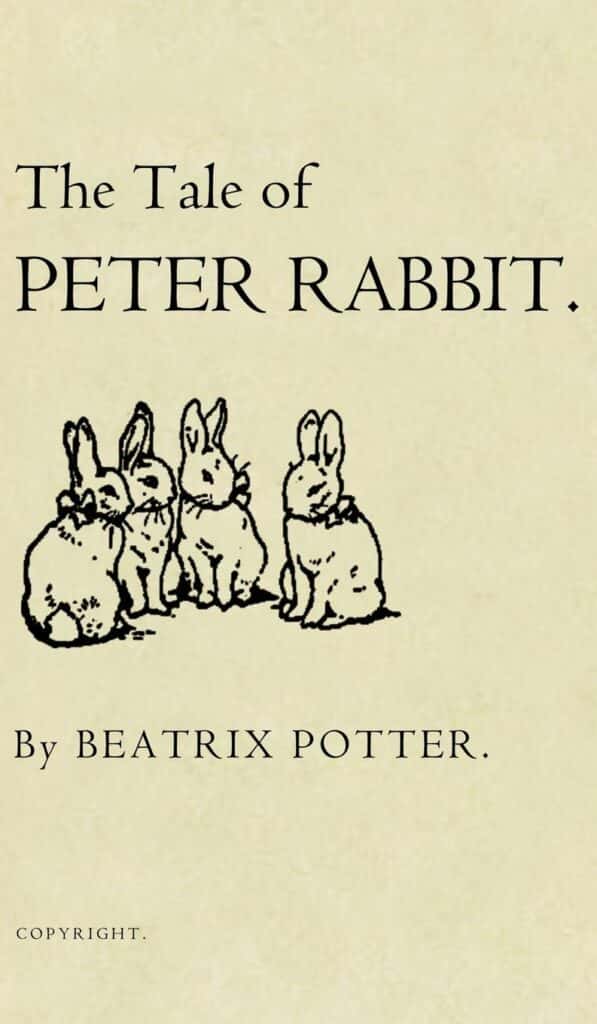
Released in 1902 through the publishing house Frederick Warne & Co., The Tale of Peter Rabbit remains a beloved classic that has captivated readers for close to a century since it first appeared in print.
Behind the Tale
What would become The Tale of Peter Rabbit had its origins not in a manuscript but in a collection of illustrated letters. Beatrix Potter composed these letters for the children of Annie Moore, her former tutor, drawing inspiration from a pet rabbit she once owned named Peter Piper. Throughout 1890, Potter kept up this delightful correspondence with the Moore children. It wasn't until 1900 that Annie Moore planted the idea that Potter could turn the story into a commercially viable book. Taking Moore's advice to heart, Potter retrieved the letters from the family and settled on one particular letter, written in September of 1893, as the foundation for her book.
The Tale of Peter Rabbit
At the heart of the story is Peter Rabbit himself — a young, mischievous rabbit whose mother sternly warns him to stay out of Mr. McGregor's garden. The reason? His father met a grim end there, baked into a pie by Mrs. McGregor. Naturally, Peter ignores this cautionary tale entirely and slips away from his family to venture into the forbidden garden. He gorges himself on vegetables until Mr. McGregor catches sight of him and the chase begins. In his frantic escape, Peter loses both his jacket and shoes. He tries hiding, only to be discovered yet again. Despite these close calls, the resourceful rabbit manages to give Mr. McGregor the slip and makes it out of the garden. Peter returns home nursing a terrible stomachache from his overindulgence, and his mother promptly sends him straight to bed. Meanwhile, the rest of the family sits down to a pleasant supper of bread, milk, and blackberries. In a final touch, Mr. McGregor repurposes Peter's abandoned clothing into a scarecrow — a closing image that leaves young readers with a gentle lesson about the wisdom of heeding their parents.
Potter's Later Career
The triumph of Peter Rabbit opened the floodgates for Potter's literary career, ultimately leading her to write 22 additional books following "The Tale of…" format. With the wealth her writing generated, she invested in purchasing farms throughout the Lancashire area, driven by a deep desire to preserve the distinctive landscape of the region.
Potter passed away at the age of 77 after falling ill with pneumonia in December of 1943. She bequeathed her land holdings to the National Trust of England, and much of that territory eventually became the Lake District National Park — a lasting, living tribute to the cherished children's author.