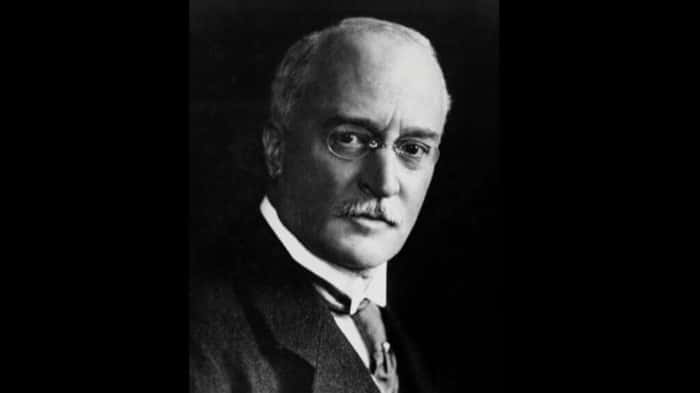
On this day in 1898, Rudolf Diesel received a patent for the oil-burning engine he had invented — what we now know simply as the diesel engine. Rather than relying on the mechanics of a steam engine, this powerplant harnesses compression ignition, requiring nothing more than air and fuel to run efficiently. Another key advantage? It produces smokeless exhaust, setting it apart from the steam engines of its era.
The impact of Diesel's groundbreaking creation reached far beyond the world of automobiles. His engine sparked transformative change across multiple industries, with heavy machinery (e.g., construction equipment) and marine transportation (e.g., cruises) standing out as some of the most dramatically revolutionized sectors.
Facts about August 9,1898-Rudolf Diesel patents diesel engine
- Before developing his famous engine, Diesel's first invention was an electrical generator that improved upon the DC generator by using commutators and inductors to produce a magnetic field.
- His second invention, the diesel engine, made it possible for electrical generators, power plants, and motors to burn any fuel without producing pollution.
- Widely regarded as one of the most significant inventions in the history of technology, the diesel engine reshaped entire industries.
- A patent disagreement arose between Rudolf Diesel and Herbert Akroyd Stuart. Even so, Rudolf Diesel's engine ultimately proved more effective than Herbert Stuart's.
- Patent number #608,845 for an internal combustion engine was awarded to Rudolf Diesel.
- The engine bears his name to this day.
- Transportation, manufacturing, and power generation worldwide were all fundamentally transformed by Rudolf Diesel's invention.