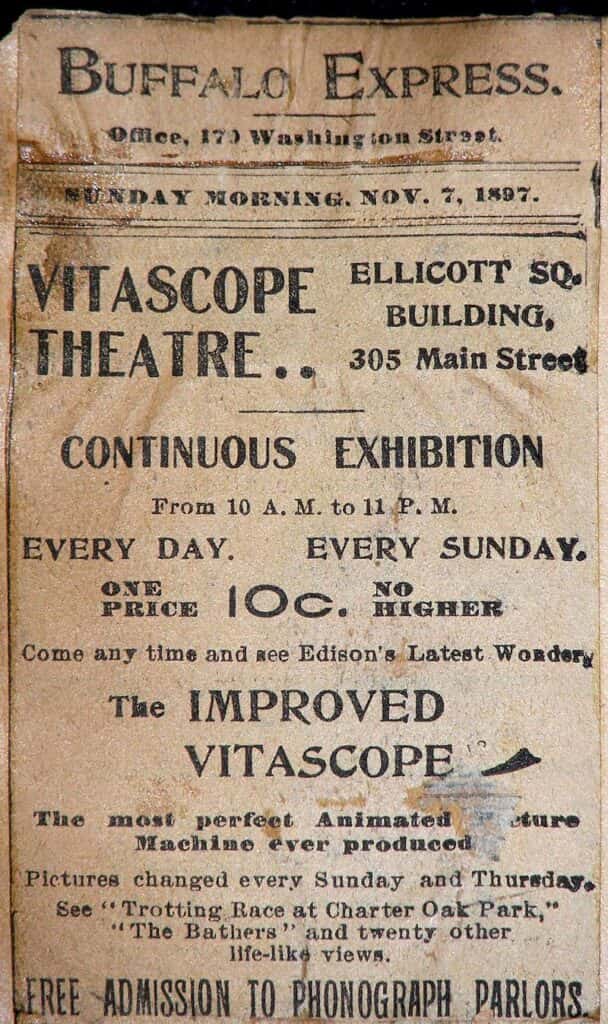
On July 26, 1896, something remarkable happened in New Orleans — the Vitascope Hall swung open its doors, earning its place in history as the first for-profit movie theater anywhere in the United States. Beyond screening domestic fare, the venue doubled as a showcase for films produced in France and England. What makes the Vitascope Hall even more fascinating is the roster of prominent figures connected to it — names like Thomas Edison, the Mayo brothers, and even William Randolph Hearst, all individuals who would go on to leave indelible marks on history. In its early days, the theater thrived, dazzling audiences with novel European movies that felt like glimpses into another world. However, calling it a success at the end would be a stretch — those same European films ultimately failed to resonate with American viewers, and patronage fell off sharply.
Facts about 26,1896- Vitascope Hall
- The theater was constructed by brothers Robert and Jules Mayo, who in 1896 made history as the very first people to utilize the Vitascope — a film projector capable of casting moving pictures onto a stage.
- Situated on Lyon Street near St. Charles Avenue in New Orleans, the "Vitascope Hall" welcomed its first paying customers on July 26, 1896.
- European-produced films largely failed to captivate American audiences, which meant business tapered off rather quickly. Still, a good number of people managed to visit the Vitascope Hall at least once during its run.
- The theater's owner was none other than Auguste Joseph Deyss, one of the most notorious figures in New Orleans at the time.
- Deyss led a colorful life — he performed circus tricks, worked as a bouncer, and even served as a road agent for gambling hells and brothels scattered throughout New Orleans.
- A second Vitascope Hall eventually opened for business at 1048 Canal Street in New Orleans, launching sometime between November 15 and December 16, 1901. Tragically, the building was destroyed by fire on December 31, 1903.