For nearly two centuries, The Lancet has served as a vital conduit for peer-reviewed medical news, discoveries, and data, reaching both the medical and scientific communities. Through journals like this one, the broader world gained — and continues to gain — access to groundbreaking information. Publishing in The Lancet has always been regarded as a hallmark of outstanding achievement, the kind of venue where you'd expect Nobel Prize winners to showcase their work, even though scientific controversy has never been in short supply. By the latter part of the nineteenth century, science had truly matured, as men and women were making breakthroughs that would enable people to lead safer lives in growing urban environments.
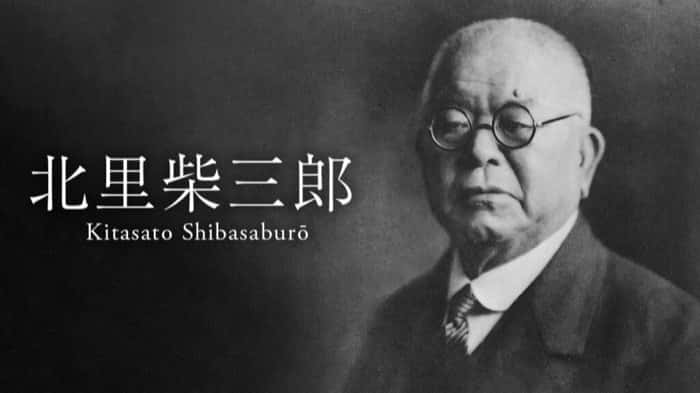
Long before it struck Hong Kong, China, in the spring of 1894, the Bubonic Plague had cyclically ravaged parts of Asia and Europe over thousands of years. What set this outbreak apart was the presence of modern scientific methods — and brilliant minds like Shibasaburō Kitasato ready to apply them. A celebrated Japanese physician, scientist, and bacteriologist, Dr. Kitasoto had already established the Institute for Study of Infectious Diseases back in 1891. Once the Japanese government dispatched him to Hong Kong, he wasted no time identifying the plague's cause, swiftly publishing his findings in The Lancet.
Of course, the identification of what caused the bubonic plague didn't come without its share of dispute. Alexandre Yersin, another physician working independently, reported discovering the cause at nearly the same time as Dr. Kitasato. That both men arrived at similar conclusions shouldn't come as a shock — each had trained under Pasteur and Koch, and both were on the ground in Hong Kong investigating the same outbreak. In an ironic twist, it was Yersin's inability to secure a proper laboratory that actually aided his discovery. The plague bacillus thrives more rapidly at room temperature, and since Dr. Kitasato relied on an incubator, his bacterial cultures grew more slowly by comparison. Even so, both men share credit for the breakthrough, due in no small part to Dr. Kitasato's decision to publish his results in the prestigious medical journal The Lancet.