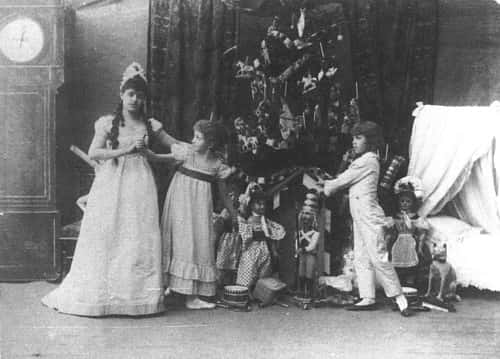
On December 18, 1892, audiences in St. Petersburg, Russia, witnessed the debut of "The Nutcracker" — just one week ahead of the country's Christmas celebrations.
Behind the Scenes
This beloved Christmas tale unfolds across two acts, weaving life lessons into a family's Christmas Eve gathering. While it steers clear of any direct references to Nativity or Christ, the production brims with fairies, Christmas trees, and children.
From the original staging by choreographer Lev Ivanov, who served as Second Ballet master for the St. Petersburg Imperial Theaters, Tchaikovsky pulled together a 20-minute suite. Marius Petipa, holding the distinguished title of Premier Maître de Ballet at the Theatres and widely regarded as the Father of Russian Ballet, also contributed to the holiday production. The conductor's podium was occupied by Riccardo Drigo.
Notably, the ballet's December 1892 premiere was paired with "Iolanta," widely recognized as Tchaikovsky's last opera.
Cast
Several folk characters brought the story to life on stage: Antoinetta Dell-Era danced the role of the Sugar Plum Fairy, Sergei Legat portrayed the Nutcracker Prince, Timofei Stukolkin took on the part of Uncle Drosselmeyer, and Stanislava Belinskaya performed as Clara/Masha.
The Response
It wasn't until 1934 that "The Nutcracker" crossed international borders, with its first staging outside Russia taking place in England. A decade later, in 1944, the ballet found its way into American performance repertoires.
Over recent decades, virtually every major American ballet company has embraced "The Nutcracker," featuring it across film, stage, and television productions. Much like Handle's performance, Tchaikovsky's December 18 opening drew sharp criticism from reviewers. Yet the ballet ultimately rose to become one of the most successful and celebrated works in the ballet repertoire, due largely to its rich background and timeless life lessons.