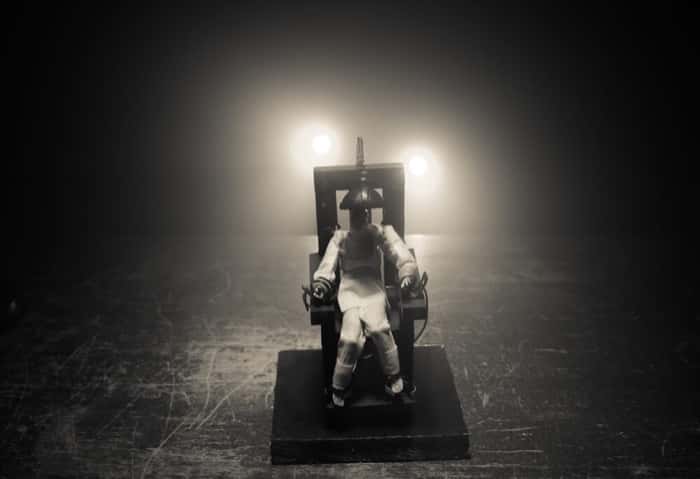
As dawn broke on August 6, 1890, Kemmler woke to face an execution unlike any that had come before. He got dressed in a suit without delay, ate breakfast, offered a quiet prayer, and then had his head shaved. Once ready, he was brought before the 17 witnesses gathered for the occasion and took his place in the chair where he would die. Those present noted how remarkably calm and composed Kemmler remained, both before and throughout the entire process.
The procedure, though, did not unfold as planned. Just the day before, the chair had undergone extensive testing on a horse, and everything had gone smoothly. But on this fateful morning, the generator supplying the electrical current had been charged to 1000 volts — a level believed to be more than adequate for triggering a swift, painless cardiac arrest that would end Kemmler's life. Electricity coursed through his body for 17 seconds, and he was promptly pronounced dead.
Yet witnesses quickly realized Kemmler was still breathing. Determined to finish the execution, officials sent a second jolt through him — this time at 2000 volts. The results were horrific and far beyond what anyone had anticipated. The surge completely charred Kemmler's skin, filling the execution room with the sickening stench of burning flesh in a deeply gruesome spectacle.
With this event, William Francis Kemmler entered history as the first person ever put to death by electric chair, carried out under New York's newly enacted execution law, which had replaced hanging with electrocution. Electrocution had been adopted because it was considered a more rapid, painless, effective, and humane alternative. Kemmler had been found guilty of the murder of his girlfriend, Matilda Ziegler, who was at the time regarded as his common-law wife.