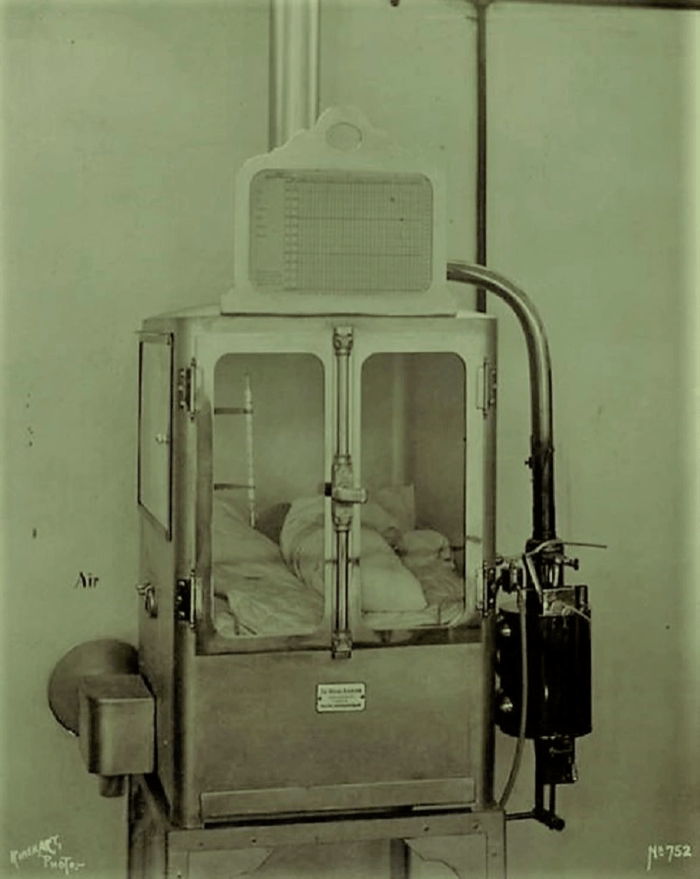
At a mere 2 pounds 7 ounces, Baby Edith Eleanor McLean entered the world remarkably small — and immediately made medical history. She became the first infant placed inside what was then called a hatching cradle, a device we now know as the incubator. The invention addressed a critical challenge: most premature babies simply cannot regulate their own body temperature without outside assistance. These early hatching cradles relied on a heating mechanism designed to sustain warmth inside the chamber over an extended period, essentially replicating the cozy environment of the mother's womb.
Fun Facts
- The concept of an incubator had already been developed in France as early as 1857.
- William Champion Deming built the first incubator unit.
- Edith Eleanor McLean was born weighing just 2 pounds 7 ounces in the State Emigrant Hospital on Ward Island, New York.
- The incubator the premature infant was placed in used 57 liters of water to keep the chamber warm.
- Edith Eleanor went on to change her name to Myrtle Eleanor. She went on to have 13 children.
- The incubator is now designed to provide heat, oxygen, and a barrier against infections for weak and sickly newborns.