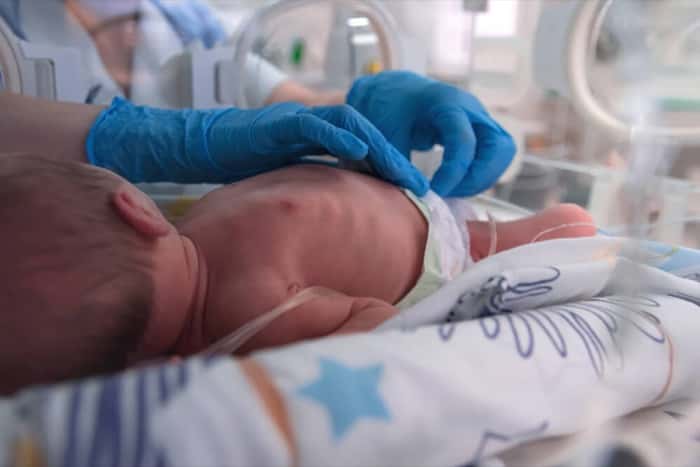
Not so long ago, the care of newborn babies was essentially confined to the home. This meant that childbirth carried serious dangers, and premature or sick infants frequently perished without ever receiving proper medical intervention.
Following the Industrial Revolution, hospitals started consolidating newborns into specialized areas known as neonatal critical care units, and it was from this development that the earliest incubators emerged. Drs created it and Allan M. Thomas and William C. Deming initially attracted public fascination before eventually becoming a staple of routine neonatal care. On September 7, 1888, Edith Eleanor McLean made history as the first baby in the United States to be placed in an incubator.
By supplying oxygen, shielding fragile newborns from cold temperatures and infectious threats, incubators replicate the optimal environment for neonates — especially those born prematurely.
Edith Eleanor McLean holds the distinction of being the first incubator baby in the United States. During the early 1800s, premature birth ranked among the leading causes of infant mortality. That began to change when a physician named Martin Couney developed the incubator. The device came with a hefty price tag, though, and hospitals were reluctant to pour money into such unfamiliar technology. Making matters worse, the medical community largely viewed preemies as "weak infants," so most doctors invested little effort in their care. Seeking financial backing, Couney participated in the Berlin Exposition in 1896, where he established a preemie exhibit/booth to attract sponsors. He later made his way to the United States and built a career as a pediatrician based in Coney Island, New York City.
Among the biggest crowd-pleasers at the 1904 World's Fair was an "exhibit" featuring 14 metal-framed glass incubators, where nurses tended to high-risk newborns drawn from orphanages and low-income families. Remarkably, the cost of caring for these vulnerable infants was covered entirely by admission fees collected from exhibit visitors.