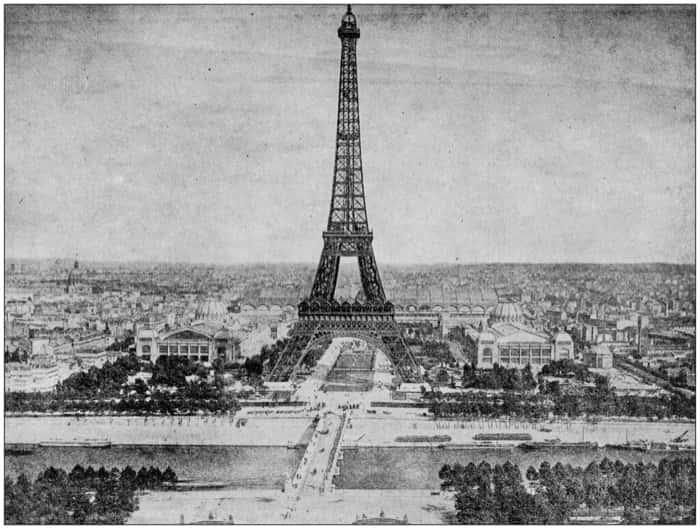
The 1889 Exposition Universelle — France's grand moment to command the global spotlight. This World's Fair represented an opportunity for the nation to demonstrate that it had moved beyond the revolutionary fervor that had torn through the country a century earlier. In an era when industrialized nations were racing to outdo one another, each eager to prove its technological superiority, France needed a showpiece. That showpiece would be the Eiffel Tower, designed to leave fairgoers in awe of what could be achieved with iron ore. When construction got underway on January 28, 1887, the ambition was breathtaking: the tower would stand as the tallest human-made structure on earth, eclipsing both the Great Pyramids and the Washington Monument.
The concept that Expo organizers settled on featured four vertical beams converging gradually toward the top, connected by girders positioned at regular intervals to provide both floor space and structural stability. Yet Eiffel himself didn't commit to the design until his two designers, Maurice Koechlin and Émile Nouguier, enhanced the basic "pylon" framework with decorative arches and additional architectural details. Operating as an independent contractor, Eiffel's company then acquired the design rights and built a model of the structure that would come to bear his name.
When the 1889 Paris Expo opened its doors, the Eiffel Tower captivated visitors. Upon its completion, it claimed the distinction of being the tallest human-made structure on the planet — a stunning engineering achievement made possible by Eiffel's team. Not everyone was charmed, though. Many Parisiennes took a dim view of the towering structure, which earned the colloquial nickname the "Iron Lady." Over time, however, attitudes shifted dramatically. The Eiffel Tower grew into an enduring symbol of Parisian culture and one of the world's premier tourist destinations, holding its title as the tallest structure until the Chrysler Building opened in 1930.