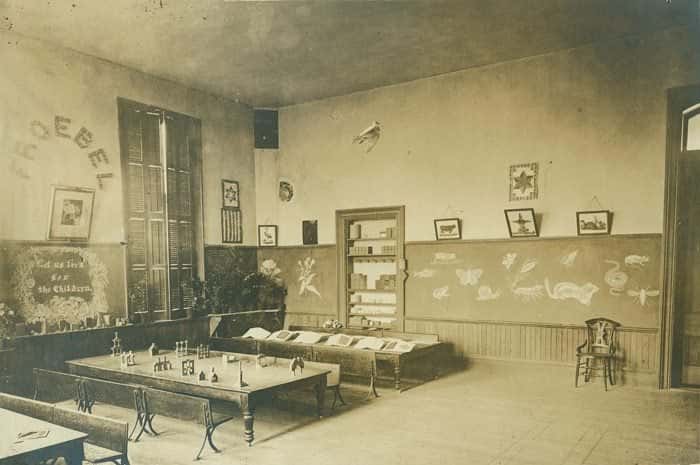
On August 26, 1873, Susan Blow made educational history by launching the first free Kindergarten in St. Louis, Missouri. Her pioneering classroom quickly became a blueprint for early childhood education, inspiring kindergarten programs to spring up nationwide. Within just six years, by 1879, the St. Louis school system had grown to include an impressive 53 kindergarten rooms.
What set his model classrooms apart was their warm, inviting atmosphere — bright and cheerful spaces that stood in stark contrast to the rather plain environments found in other classrooms of that era. Inside, short benches and low tables were designed with young learners in mind, and children explored concepts like shapes, colors, and fractions through hands-on play with simple objects such as balls and blocks.
Beyond academics, students were introduced to practical life skills, including neatness, healthy eating, and regular exercise.
The years of relentless effort Susan Blow poured into transforming early education eventually took a serious toll on her well-being. Falling ill, she stepped away from her work and retired in 1884. In search of better health, she began traveling more extensively and ultimately left St. Louis in 1889. Settling in New York and Boston, she continued championing her cause from afar, writing books and delivering lectures dedicated to the kindergarten movement.