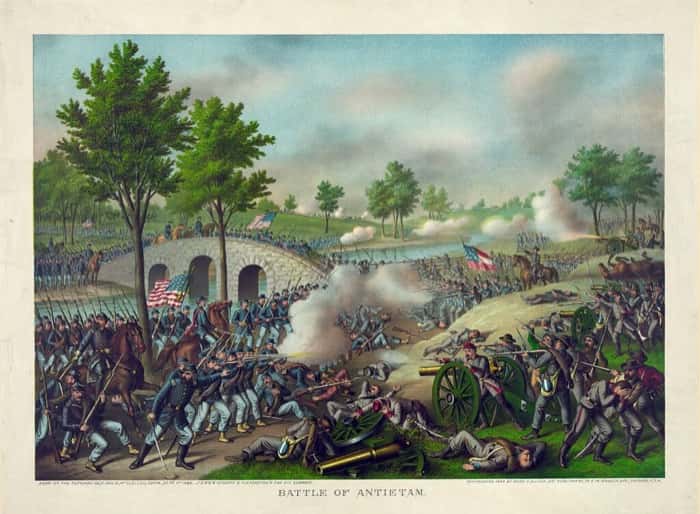
On September 17, 1862, near Sharpsburg, Maryland, two massive armies collided in what would become the single bloodiest day of the Civil War. Known both as the Battle of Antietam and the Battle of Sharpsburg, this fierce engagement pitted the Union's Army of the Potomac, commanded by Gen. George B. McClellan, against Gen. Robert E. Lee's Confederate Army of Northern Virginia.
Lasting roughly 12 hours, the clash between Union and Confederate forces produced a staggering toll — about 22,717 casualties in all, counting the dead, injured, and missing. While the Union Army ultimately claimed victory, it actually absorbed heavier losses than its Confederate opponent. Among the fallen were six generals: three from the Union Army and three from the Confederates' side. Beyond those killed, an additional dozen generals sustained wounds during the fighting.
Historians have pointed to Antietam as a pivotal turning point for several reasons. The battle helped safeguard the Federal Capital from invasion, played a role in discouraging Great Britain from extending diplomatic recognition to the Confederacy, and significantly shaped how the remainder of the Civil War — which ultimately concluded on April 9, 1865 — would be fought.
Seizing on the momentum created by the Union Army's triumph at Antietam, President Lincoln moved quickly to leverage the moment. On September 22, 1862, he issued the Preliminary Emancipation Proclamation, declaring that all enslaved people residing outside Union-controlled territory would be freed if the Confederates refused to lay down their arms.