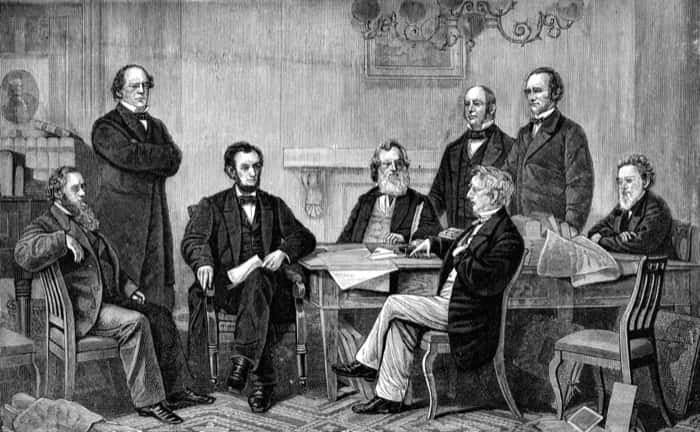
Among the most revered figures in the story of the United States, Abraham Lincoln holds an enduring place in the national imagination. His leadership during the Civil War — guiding the nation through its most existential crisis, holding the Union together, and bringing an end to slavery — defines his legacy. Beyond the battlefield, his presidency also saw the pursuit of meaningful reforms that touched on economic progress and the broadening of civil rights and liberties.
It was on February 1, 1862, that a remarkable gathering unfolded at the White House in Washington, D.C. President Abraham Lincoln sat down with two towering voices of the abolitionist movement — Ralph Waldo Emerson and Charles Sumner — to engage in a conversation centered on emancipation. The meeting represented far more than a political discussion; it stood as a testament to the deep devotion all three men shared toward the ideals of freedom and equality, marking a pivotal chapter in the nation's history.
Emerson Shares His Opinion
Ralph Waldo Emerson made his convictions unmistakably clear during the exchange, pressing the case that abolishing slavery was of paramount urgency. He urged the President to move swiftly, insisting that emancipation should proceed immediately and without offering any financial compensation to slaveholders in the South. Beyond the policy itself, Emerson stressed that moral courage and unwavering integrity had to guide every step of the process, calling on Lincoln to fulfill what he saw as a solemn obligation to champion the cause of freedom.
The Emancipation Proclamation
On January 1, 1863, President Abraham Lincoln issued the Emancipation Proclamation, a landmark decree that proclaimed freedom for all enslaved people held in territories still actively rebelling against the United States. Conceived primarily as a military strategy, the proclamation did not extend to enslaved individuals in states that had remained loyal to the Union, nor did it immediately liberate those within the Confederacy's borders. From the initial conversations at The White House involving Lincoln, Emerson and Sumner, nearly two years passed before the proclamation finally took effect.
At its core, the executive order declared that "all persons held as slaves" in the rebellious states "are, and henceforward shall be free," while simultaneously prohibiting their re-enslavement in the future. On top of this, those who gained their freedom were guaranteed military protection and given the opportunity to volunteer for service in the Union army, receiving equal pay compared to white soldiers enlisted into service at that time.