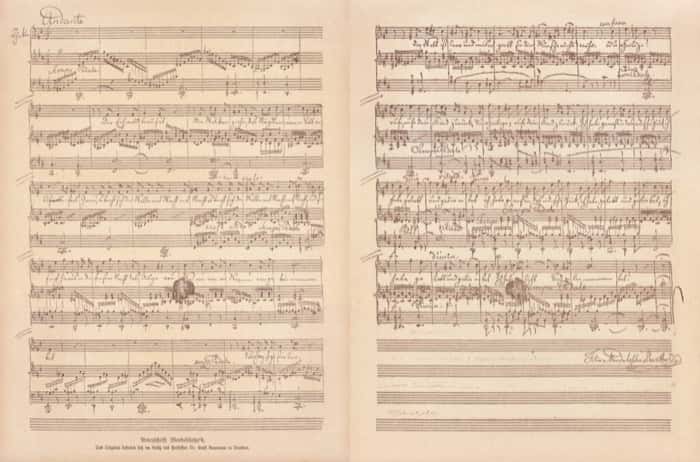
It was on January 25th, 1858, that Felix Mendelssohn's beloved "Wedding March" made its most famous appearance — performed during the marriage ceremony of Princess Victoria, daughter of Queen Victoria of the United Kingdom, to Crown Prince Frederick William of Prussia.
Remarkably, Mendelssohn composed this iconic piece when he was just 17 years old. He originally crafted it as part of his incidental music for A Midsummer Night's Dream, intended to accompany the scene in which Titania, queen of the fairies, weds her lover Oberon, the king of the fairies.
"Wedding March" Becomes A Wedding Song
The earliest known instance of the "Wedding March" being played at an actual wedding dates back to 1847, when Dorothy Carew married Tom Daniel at St. Peter's Church in England. On that occasion, the piece was performed on an organ by Samuel Reay.
Still, it took the royal nuptials of Princess Victoria and Prince Frederick to truly catapult the song into widespread popularity as one of the world's premier wedding anthems. Queen Victoria herself was a devoted admirer of Mendelssohn and frequently invited him to perform for her in Britain.
Fun Facts:
- "Wedding March" is now one of the world's most popular and recognizable pieces of wedding music. It is frequently played as recessional music after a couple is pronounced married.
- Mendelssohn's "Wedding March" is not the only piece of music to have been adapted from a play; many other famous compositions, such as Tchaikovsky's "Swan Lake" and Rossini's "The Barber of Seville" also started as the play soundtrack.
- The lively and cheerful nature of the song is said to reflect Mendelssohn's joyful and optimistic spirit.
- The organ Mendelssohn used for the song is on display in St. Ann's Church.