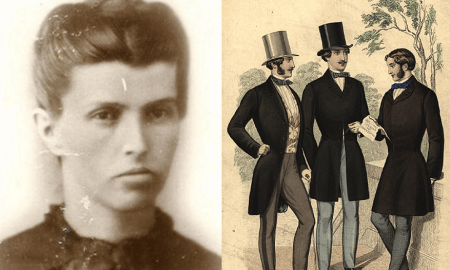
Snodgrass Breeches Boston
Today, nobody bats an eye at a woman in pants. But back in 1852, the sight was enough to send the good citizens of Boston, Massachusetts into a full-blown panic.
Harriet French
Growing up in New York under the roof of her father, a Police Captain, Emma Snodgrass was a young woman destined to become well-acquainted with the inside of a jail cell throughout the 1850s. Her stints behind bars never lasted long, though — she'd typically walk free the following day after promising to stop committing the moral offense of dressing in the "habiliments of the other sex," or she'd be handed back over to her father in New York. What made her arrest on December 29th of 1852 especially noteworthy was that she wasn't the only one hauled in that day — a fellow law-breaker named Harriet French was arrested right alongside her.
Harriet French
When authorities caught up with Snodgrass on that particular occasion, she was in the company of a tobacco-chewing companion who went by the name of Charley. As it turned out, Charley was actually a woman — Harriet French. French had started wearing pants for an entirely practical reason: she wanted to earn a better living. Women of the era faced severely limited job prospects and were routinely paid far less than men doing comparable work. For a while, the disguise served her well, and she managed to land a range of jobs, from working aboard a steamboat to tending bar.
The courts, however, soon revealed just how differently they treated people based on social standing. Once the two friends were separated, Emma found herself shipped back to her father in New York yet again. French, on the other hand, faced a far harsher fate — she was sentenced to the local House of Industry, a place that essentially operated as a labor camp for the poor.
Emma Snodgrass's Legacy
It wasn't long before Emma Snodgrass became something of a celebrity in her own right. The press bestowed colorful nicknames upon her, calling her everything from the "foolish girl who goes around in virile toggery" to the "wanderer in man's apparel." Newspapers eagerly reported her sightings, treating them much the way we'd treat Elvis sightings today.