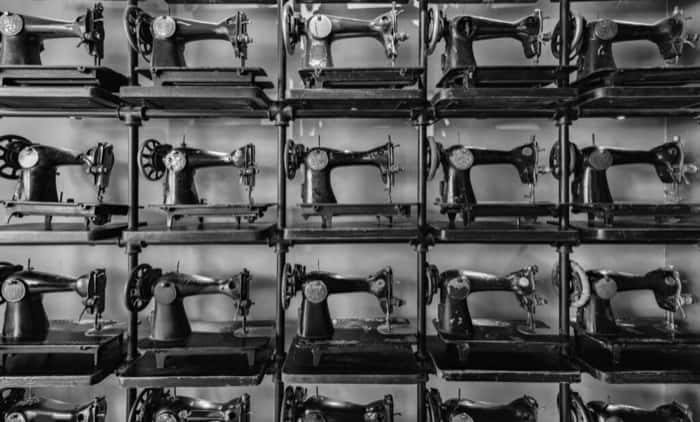
On August 12, 1851, Isaac Singer secured a patent for his sewing machine — a device born from years of refinement that would quickly become a staple of the tailoring industry. Singer didn't stop there, though. He went on to introduce a series of innovations that made his machines increasingly user-friendly and versatile. Since its founding in 1851, the iconic sewing company has maintained its reputation as one of America's leading manufacturers of household appliances, a distinction it holds to this day.
Facts about August 12, 1851- Isaac Singer patents his sewing machine
- The sewing machine was conceived from the outset to harness existing human abilities in a productive way — specifically, it relied on the use of both hands rather than merely a foot to carry out the required manual work. It would take another 100 years after Singer's time before motorized machines like sewing machines were developed.
- What made Singer's design stand out was its simplicity: it employed just a single motor-driven wheel positioned above the primary needle-driver wheel, which moved up and down to stitch through material.
- Because Singer's machine operated without a foot pedal, users found it considerably easier to handle than the foot-operated devices that were common at the time. Controlling the needle and thread movements became far more intuitive, giving it a clear edge over competing sewing machines of that era.
- Children could operate Singer's design with relative ease, since it didn't demand a complex range of finger movements to function properly.
- Beyond ease of use, Singer's sewing machine delivered a level of quality that had previously been out of reach for mechanical devices. There was a time when the ability to produce fine seams was the key advantage that hand-sewing held over machine-sewing — Singer's invention changed that.
- Portability was another crucial element of Singer's design. The fact that the machine could be easily moved made it all the more appealing to both everyday consumers and manufacturers alike.
.