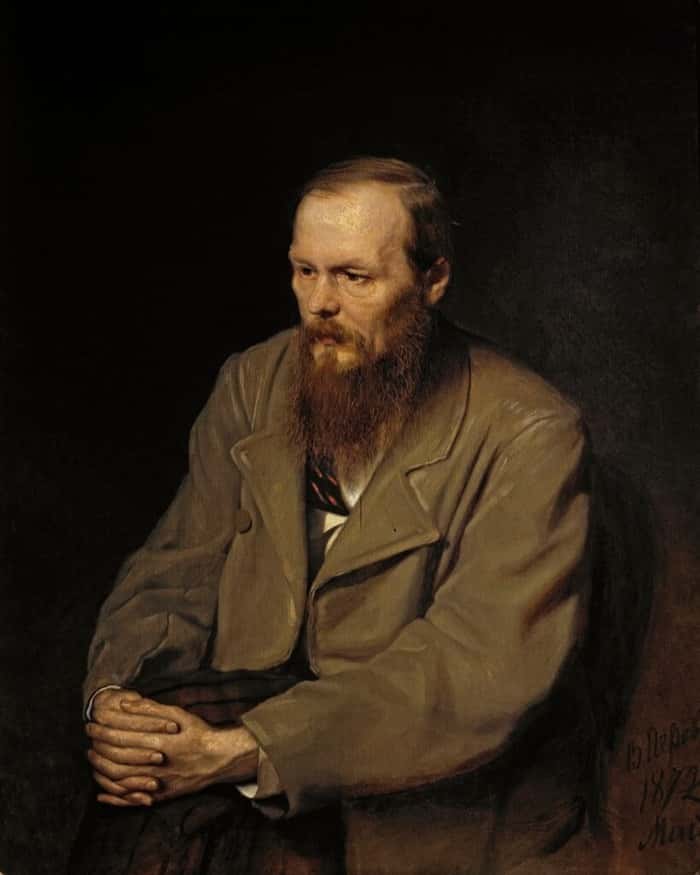
Few writers in history have endured as dramatic a journey as Fyodor Dostoyevsky. Widely regarded as one of the greatest literary minds the world has ever known, his path to fame was anything but smooth. Between desperate pleas for money and staring down the barrels of a firing squad, the story of Fyodor Dostoyevsky is one of remarkable survival.
Dostoyevsky's Early Life
Born on November 11, 1821 in Moscow, Russia, Fyodor Dostoyevsky grew up in unusual circumstances. His father, a well-known doctor, lived on the grounds of the Mariinsky Hospital for the Poor — meaning young Fyodor spent his formative years surrounded by both low-income patients and books. These twin influences ignited a lifelong passion for each.
When his mother passed away, the 15-year-old Fyodor enrolled at the Nikolajev Military Engineering Institute. Once his training was complete, he settled into an affluent lifestyle, supplementing his income by translating books. But everything changed in 1849, when Fyodor Dostoyevsky found himself under arrest for his involvement with the Petrashevsky Circle — a literary group whose members discussed books critical of the Tsar.
A Narrow Escape
On December 22, 1849, guards suddenly pulled Fyodor Dostoyevsky from his confinement and positioned him before a firing squad. Then, in a breathtaking turn of events, a cart appeared carrying a letter from the Tsar just moments before the execution could proceed. His death sentence was commuted, and he and the other condemned men were sent to Katorga Prison in Siberia. There, Dostoyevsky endured four years of hard labor. Upon his release, he still faced six years of compulsory military service.
Even while carrying out the rest of his sentence, fellow inmates remembered Dostoyevsky as a deeply kind person. His words of encouragement were reportedly powerful enough to talk a fellow inmate out of taking his own life.
Dostoyevsky's Literary Career
The human condition in troubled 19th-century Russia stood at the heart of much of Fyodor Dostoyevsky's writing. Religious and philosophical themes ran throughout his body of work.
Among his most celebrated titles are Crime and Punishment, Demons, Notes from the Underground, and The Idiot, in which he draws on his harrowing experience standing before the firing squad.
Over the course of his career, Dostoyevsky produced three novellas, thirteen novels, and seventeen short stories. His writings have since been translated into over 170 different languages, and his influence has extended to numerous film adaptations.