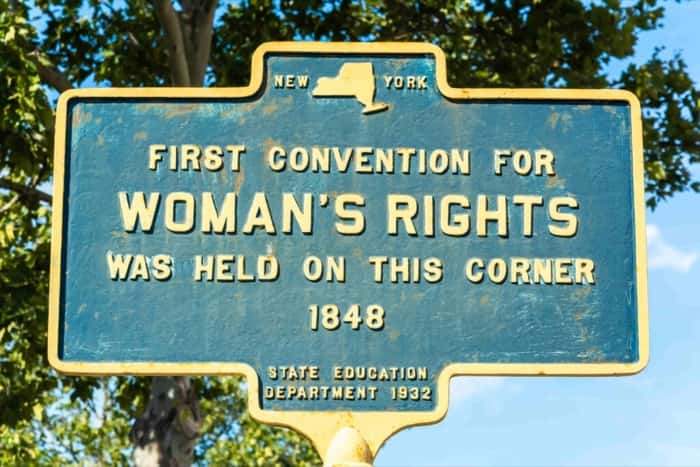
On July 19, 1848, something revolutionary took place inside the Wesleyan Chapel in Seneca Falls, New York — the USA's first woman's rights convention. Known as the Seneca Falls Convention, this gathering became the launchpad for the women's suffrage movement, igniting a long struggle to secure women's right to vote.
The convention grew out of the original Woman's Rights Convention, organized by five determined women: Elizabeth Cady Stanton, Mary M'Clintock, Jane Hunt, Martha Coffin Wright and Lucretia Mott. Their goal was to challenge the status quo and advocate for women's religious, civil and social rights. The gathering commenced on July 19, 1848, and wrapped up the following day, July 20, 1848.
Despite receiving little publicity, the event drew more than 300 participants. The first day was reserved exclusively for women, while men were welcomed to join on the second day.
The seeds of this historic convention were planted years earlier. Stanton and Lucretia, both abolitionists, first crossed paths at the World Anti-Slavery Convention held in London in 1840. At that gathering, both Stanton and Mott found themselves barred from the floor.
The resulting indignation built to a climax that ultimately sparked a broader movement dedicated to fighting for women's rights in the US.
When Stanton addressed those assembled at the Seneca Falls Convention, she framed the gathering as a protest against a government operating without the consent of the governed. Women, she declared, possessed the same resolve to be free as men, who already enjoyed the privilege of representation in government. Fellow participants echoed these powerful sentiments throughout the proceedings.
At the heart of the convention were 11 resolutions centered on women's rights. All were adopted unanimously — with one notable exception. The 9th resolution, which called for women's right to vote, faced resistance.
Yet Fredrick Douglas and Stanton each delivered impassioned and compelling speeches championing the 9th resolution, ultimately securing its passage. Still, the road ahead was long — it would take more than seven decades of persistent agitation before women were finally granted the right to vote.
Taken together, the 11 resolutions made a bold demand: full equality between men and women. They urged Americans to abolish any laws that positioned women as inferior to men. Additionally, they affirmed that women deserved the same rights as men, including equal access to employment opportunities.