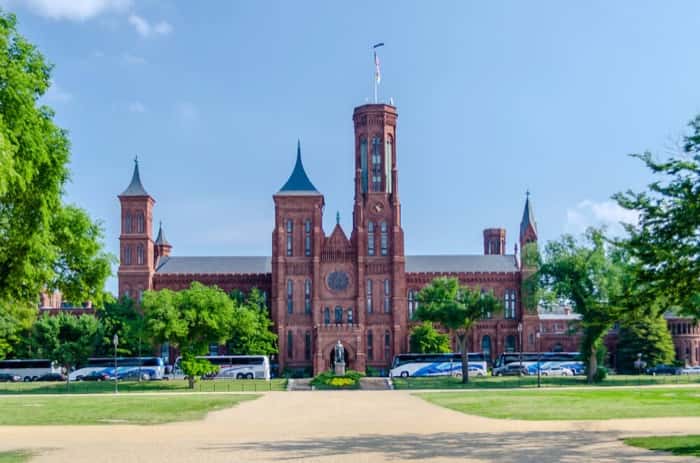
What stands out about the Smithsonian Institution? It holds the distinction of being the world's largest museum complex. Its creation, however, was far from swift. More than a decade of back-and-forth among Congress and the public preceded the passage of legislation that officially established the Smithsonian Institution on August 10th, 1846. That very same day, President James K. Polk signed the measure into law.
The story traces back to James Smithson, an English mineralogist and chemist whose will contained a remarkable provision. Should his heirs pass away without producing heirs of their own, his estate was to go to the United States — with the purpose of forming an institution dedicated to the "increase and diffusion of knowledge among men."
Given how broadly Smithson had defined his vision, the United States opted to establish the Institution as a federal entity deliberately set apart from the political machinery of the three branches of government. To govern it, a board of regents was formed, with leadership placed in the hands of the Secretary of the Smithsonian.
The board's very first order of business was establishing a physical home for the Institution. Architect James Renwick Jr. designed and built a Norman "Castle" on the National Mall in Washington D.C. to serve as that headquarters.
In the modern era, the Smithsonian Institution stands as a driving force in the innovative discovery, preservation and curation of historical and digital artifacts alike.
Spread across the United States, the Smithsonian encompasses cultural centers, research centers, museums and zoos — with 11 of its 20 locations situated right on the National Mall. These sites draw the greatest number of visitors and attract the widest audiences within the Institution, while the remaining locations call New York City and Chantilly, Virginia home. Through it all, the Smithsonian remains committed to preserving heritage, uncovering new knowledge, and sharing its resources with the world.