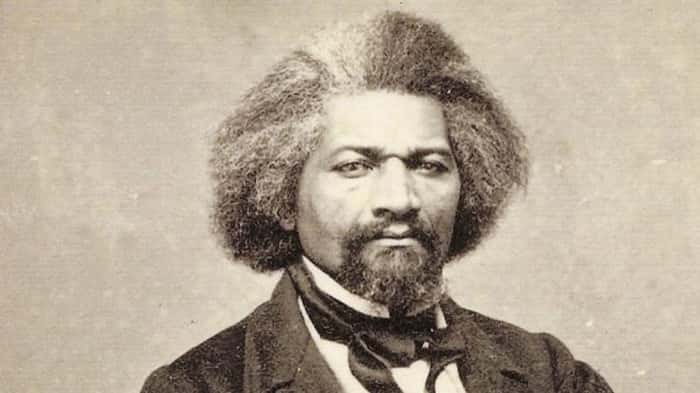
On September 3, 1838, a young man disguised as a sailor made his bold bid for freedom — Frederick Douglass fled from captivity at Covey's farm. During his time as an enslaved person, he had been subjected to forced labor in Baltimore's shipyards. To pull off his daring escape, he obtained papers belonging to a freed black sailor, which proved invaluable as he made his way along the route to liberty.
What gave Douglass a critical edge was his deep familiarity with ships' parts, allowing him to speak convincingly in the language of seafaring men. Once he had secured his freedom, at the age of Twenty Seven (in 1845), he traveled to Ireland, where he began fundraising to fuel his anti-slavery campaign and ignite rebellion against the institution.
Arguably the most monumental victories in the broader fight against slavery, however, came through legislation — Britain's prohibition of the practice and the US 13th amendment, which formally abolished slavery and liberated over 100,000 enslaved individuals across a stretch of territory from Kentucky to Delaware.
Fun Facts:
- Douglass had tried to escape before — this was far from his first attempt. He was fearless in the face of those who held him captive, even physically confronting the infamous "slavebreaker" Edward Covey. In Douglass's own words: "This battle with Mr. Covey was the turning point in my career as a slave. It rekindled the few expiring embers of freedom, and revived within me a sense of my own manhood. It recalled the departed self-confidence, and inspired me again with a determination to be free."
- In 1838, Douglass made his successful break from Covey's farm by boarding a nearby train. From there, he rode to Havre de Grace, Maryland, then passed through Delaware — itself a slave state at the time. His journey ultimately brought him to New York, where Abolitionist David Ruggles had established a safe haven for formerly enslaved people.
- The American Anti-Slavery Society came into existence in 1833, which also happened to be the year Britain outlawed slavery.
- A self-taught reader and writer, Frederick Douglass devoted time to helping fellow enslaved people gain literacy. He went on to pen his own autobiography, Narrative of the Life of Frederick Douglass.
- Born Frederick Augustus Washington Bailey, Douglass later sought the help of his friend Nathaniel Johnson in choosing a new surname. Johnson drew his inspiration from Sir Walter Scott's poem Lady in the Lake.