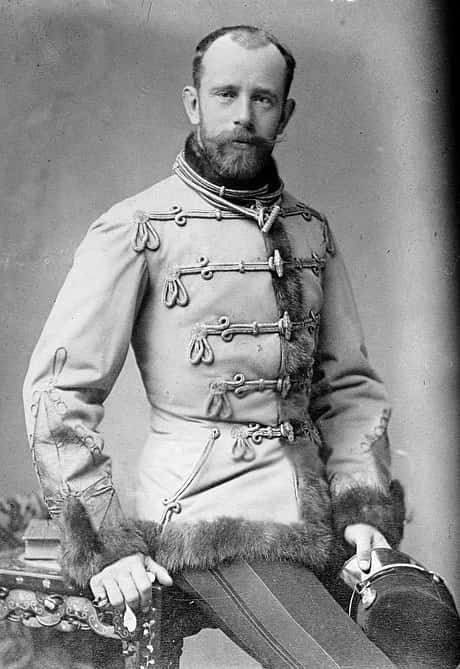
In the predawn hours of January 30, 1889, Crown Prince Rudolf Franz Karl Joseph — a scion of the Habsburg-Lorraine dynasty — allegedly put a bullet through his own head. What history has handed down to us is a murder-suicide pact involving his lover, Baroness Mary Vetsera, whose body was discovered naked and lifeless on the bed beside the Prince.
She was just seventeen; he was thirty. The conventional narrative frames this devastating episode as the tragic consequence of a forbidden romance. But the question lingers: did the man who stood to inherit the Austrian Empire truly take his own life?
Suicide or Murder Cover-Up?
A murder-suicide pact is far from the only explanation that has been put forward for the events of that night. When you consider the web of political scheming that consumed European rulers in the late nineteenth century, a far more sinister cause of death starts to seem plausible.
Rudolf was arguably the most progressive future monarch anywhere in Europe — a genuine liberal thinker who was well ahead of his era. That forward-looking worldview earned him no shortage of enemies among his contemporaries, many of whom would have been happy to see him gone. On top of that, he was known as a philanderer, carrying on affairs with at least two other women even while involved with the Baroness.
Almost immediately, the machinery of an official cover-up kicked into gear. The press initially reported that the Prince had succumbed to a heart attack, even though an eyewitness came forward claiming he had actually ingested cyanide.
Authorities sealed away every official record related to the Mayerling incident, leaving only suicide notes supposedly penned by the lovers to their respective families. That said, virtually no one accepts those notes as authentic.
The Prince's Unintentional Impact On WW1
The course of modern European history might look dramatically different had Prince Rudolf Franz Karl Joseph survived.
Just a few short decades after his death, an assassination would spark the powder keg that became the First World War. Historians have gone on to speculate that if Rudolf had lived, the ArchDuke would never have been assassinated — and WW1 might never have begun at all.