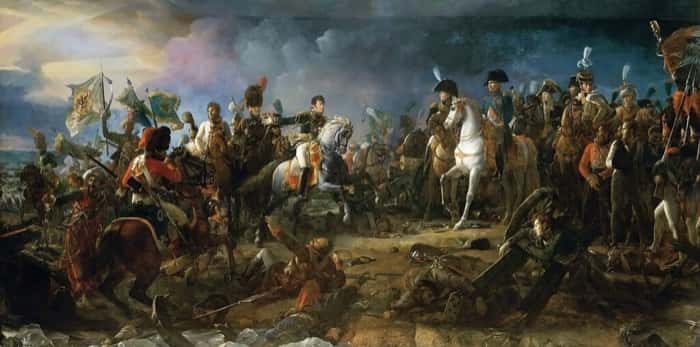
The Napoleonic wars were a string of military confrontations pitting the French Empire and its allies, under the leadership of Napoleon Bonapart, against a range of European nations. These sweeping campaigns of aggression targeted European rivals and ushered in an era where France held dominant sway across the continent. Although a treaty in 1814 was meant to bring the fighting to a close—and Napoleon was sent into exile on Elba—he found a way to escape, return to France, and reclaim power for a dramatic stretch of 100 days.
In the end, though, Napoleon Bonapart suffered defeat yet again and was persuaded to step down from power for the 2nd time, paving the way for King Louis XVIII to be reinstated as France's ruler. The prolonged hostilities came to a formal conclusion on November 20th, 1815, when all parties put their signatures on the Treaty of Paris of 1815, commonly known as "The Second Treaty of Paris."
Fun Facts about The Second Treaty of Paris:
- Because of widespread concern over how much support Napoleon Bonapart still enjoyed within France, the Second Treaty of Paris imposed far stricter terms on the nation than the first treaty had.
- A fine of 700 million francs was levied against France for war crimes, and on top of that, France was required to pay an additional sum to fund defensive fortifications in Coalition countries.
- The Paris peace treaty involved Austria, Great Britain, Prussia, and Russia; beyond this, a separate agreement was also reached that formally recognized the neutrality of Switzerland.
- Under the 1815 Paris Treaty, Napoleon gave up his role in French governance—remarkably, this marked the second time he had relinquished power.
- The entire treaty was written in French, serving as a lingua franca—essentially a bridge or shared language among the various parties involved.