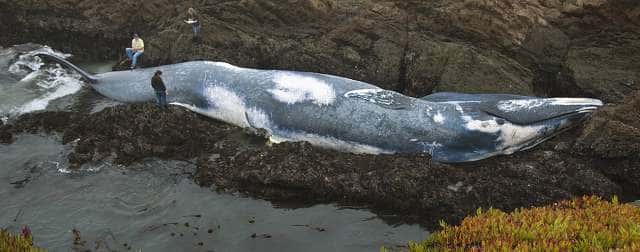
On this day back in 1806—January 8, to be precise—members of the Lewis and Clark Expedition stumbled upon the skeletal remains of a massive whale measuring 105 feet in length. That was two hundred sixteen years ago.
The Discovery
Word had reached Fort Clatsop following the 1805 holiday season that an enormous whale had washed up and died close to a Tillamook hamlet. Eager to investigate, Captain Clark assembled a party of roughly 12 men, along with Sacagawea, Charbonneau, and Jean Baptiste, and the group launched two canoes from Youngs Bay. On January 6, 1806, they paddled up the relatively calm Skipanon River before continuing their journey on foot, trekking over Tillamook Head toward the saltmakers' settlement.
By the time Clark and his companions arrived at what we now call Ecola Beach, there wasn't much left to see. The whale's bones had already been stripped bare, and the local inhabitants were busy "boiling whale in a trough of about 20 gallons with hot Stone," as Clark recorded in his journal. Through a bit of bargaining, Clark managed to obtain a few liters of oil along with around 300 pounds of whale blubber.
What Do You Do With A Beached Whale?
Clark kept careful records of the animals and Native Americans the group encountered throughout their travels, but when it came to this particular whale, his knowledge was limited to its impressive size and the fact that the meat tasted excellent once cooked. For the Expedition members, who were in the process of constructing Fort Clatsop in what is now the city of Cannon Beach in Oregon, this beached whale represented a truly welcome windfall. Unfortunately, the local fauna and people made quick work of the meat, leaving precious little behind. Beyond nourishment, though, the whale's carcass provided another valuable resource: oil that could fuel their lanterns. And while the whale meat could be chewy or even blubbery in texture, people relished eating it all the same.
A Monument To Remember
At Whale Park, situated along the northern edge of downtown Cannon Beach, Oregon, visitors can find a 9-foot-long metal sculpture simply called "Whale." This striking statue stands as a tribute to Captain Clark and the traveling party that accompanied him.