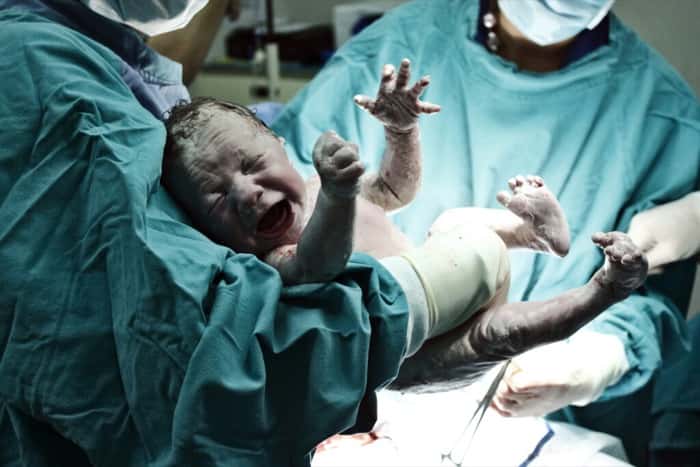
Deep in the Virginia backwoods, January 14, 1794, marked a remarkable moment in American medical history — the arrival of a baby girl into the Bennett family. But this was far from a routine delivery. When his wife's labor came to a dangerous halt, threatening both her life and the life of their unborn child, Dr. Jesse Bennett took the extraordinary step of performing a cesarean section.
Gripped by the fear that she would not survive, Elizabeth Bennett pleaded with her attending physician, Dr. Humphrey, to carry out the surgical delivery and at least save the baby. Dr. Humphrey, however, refused. He was convinced the operation would almost certainly kill both mother and child. After all, such a procedure had never before been attempted anywhere in America.
With no other options left, Dr. Jesse Bennett was compelled to take up the scalpel himself in a last-ditch effort to rescue his wife and their unborn child. Nothing about the situation was planned, and proper surgical instruments simply weren't available. Wooden planks laid across barrels served as a makeshift operating table, while laudanum had to stand in for a proper anesthetic. The only source of illumination was candlelight, and maintaining any kind of sterile environment proved impossible. Yet despite every one of these daunting obstacles, the operation succeeded.
Both Elizabeth and her newborn daughter, Maria, pulled through. Remarkably, though, Dr. Jesse Bennett kept the details of the surgery to himself for the rest of his life, convinced that no one would believe his account. Because of this silence, the sole record of this groundbreaking delivery comes from eye-witness testimony provided by neighbors and household servants. In modern times, cesarean deliveries make up almost 30% of all births in the United States.