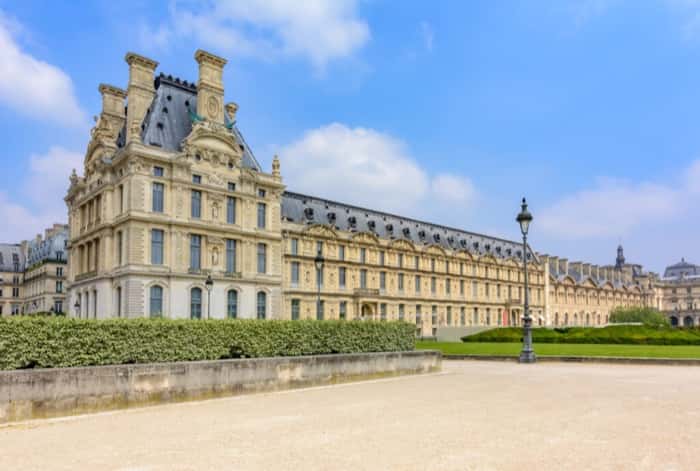
When the Louvre palace threw open its doors in Paris in 1793, few could have predicted the cultural revolution it would spark. What had started life as a fortress designed to protect Paris gradually transformed into one of the world's most celebrated repositories of art. Its opening marked a turning point that would fundamentally reshape how the public thought about art and the practice of collecting.
France had endured devastating religious wars before Napoleon Bonaparte seized power in 1799, with soldiers repeatedly looting and destroying property across the country. Against this backdrop, the concept of a public art museum struggled to gain traction. Yet the French Revolution brought about a broader distribution of wealth, and with it came a growing appreciation for the visual arts among the populace.
The transition also involved relocating the Louvre's library and archives from the Tuileries Palace in Paris to their new home within the Louvre palace. By 1801, these holdings had been folded into the National Archives. In the present day, these collections form part of the National Library of France.
Facts about August 10, 1793- The Louvre palace opens in Paris
- The Louvre palace is a classic palace found on the Right Bank of the Seine in Paris.
- Holding the title of the most visited museum on the planet, the Louvre claimed the number one spot globally in 2021, drawing almost 3 million visitors that year.
- Architecturally, the palace is quintessentially French, nestled in a verdant setting near the Tuileries Palace. It was originally constructed as a fortress intended to defend against west attacks.
- Prior to the French Revolution, France had no art museums to speak of — the Louvre palace instead served dual duty as a military stronghold and a royal residence.
- The French Revolution in 1793 catapulted the Louvre to fame as a home for magnificent art collections. Most notably, it became the guardian of countless treasures created by French masters, salvaged from churches and monasteries that had been invaded during the Revolution.
- The National Assembly, acting during the French Revolution, decreed that the Louvre palace should function as a museum dedicated to displaying the country's masterpiece.
- I. M. Pei served as the designer of the Louvre pyramid, which represented his first significant work. Charles Percier succeeded him, and the two collaborated on the design, studying Egyptian pyramids to find inspiration for both the aesthetic and construction technique behind the Louvre pyramid.
- On the day it opened, the Louvre palace had 537 paintings on display. The vast majority of these works consisted of royal collections and seized church properties.