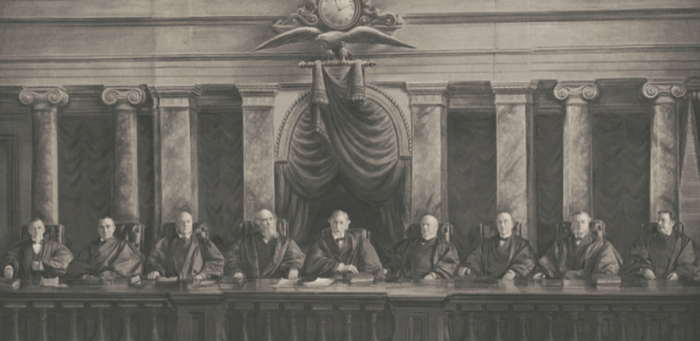
The Judiciary Act of 1789 brought the federal court system of the USA into existence through a landmark piece of legislation. Before its passage, Article III of the constitution was plagued by vagueness and unresolved gaps — issues that would ultimately require political solutions. With the revised ACT in place, Congress moved to address these shortcomings by granting district and circuit courts limited jurisdiction and establishing a six-person supreme court.
Crafted primarily by Senator Ellsworth of Connecticut, this groundbreaking Act laid out the jurisdictional boundaries of the federal court system while simultaneously creating the office of the Attorney General. Backed predominantly by the federalists, the legislation gave shape to a six-person judiciary that consisted of the Chief Justice alongside five Associate Justices.
It was Senator Oliver Ellsworth of Connecticut who penned the Judiciary Act of 1789, which President George Washington then signed into law. The Federalists championed the revision of Article III more than any other group, and their efforts culminated in the creation of a six-person Supreme Court.
Beyond defining the federal court system's jurisdiction, the Act empowered Congress to establish lower federal courts. It also brought into being the office of the Attorney General, expanding the institutional framework of the young nation's government.
One of the Act's other notable achievements was spelling out how federal courts would coexist alongside the courts operating within each state. While the original Act has undergone numerous modifications through the years, its foundational structure has endured largely intact.