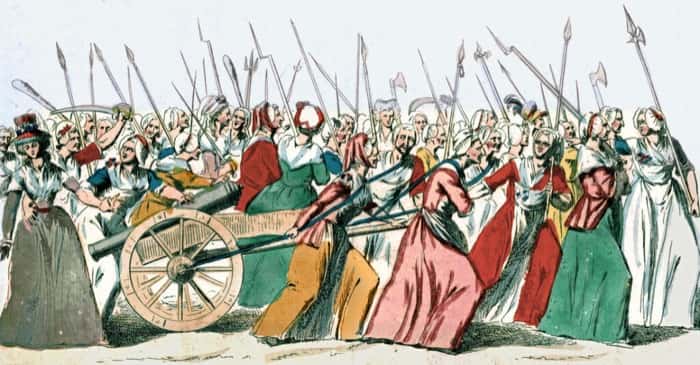
It was the morning of October 5th, and in a Paris marketplace, women were starting to come together — the spark of something momentous was about to be lit.
The Price of Bread and a Drum
France stood on the edge of revolution, with bread prices climbing and violence spreading through the streets. A toxic combination of poor policy decisions and a particularly bad harvest had made shortages a regular occurrence. That day, women who had gathered at the Paris marketplace found themselves boiling over with fury at the relentless scarcity of basic necessities. Then, from somewhere at the edges of the growing crowd, someone struck a marching drum — and with that, the Women's March on Versailles was underway.
Their ranks grew steadily as they moved through the city, swelling into the thousands by the time they reached the City Hall of Paris. There, the massive crowd issued two demands: bread and weapons. Officials initially turned them down, but resistance proved futile once the throng surged into the building and seized both food and weaponry for themselves. Now armed, the women set their sights on Versailles once more. Word of the growing crowd spread quickly, and National Guardsmen soon fell in alongside the marchers.
Revulsion and Revolution
Beyond the boundaries of Paris, the procession kept expanding — and so did its ambitions. What had started as a demand for bread was evolving into something far more sweeping. A rallying cry that resonated powerfully through the crowd was the idea of relocating the King, the Assembly, and his court to Paris, where they would live in "communion with his own people." Those with more revolutionary leanings saw this as a golden opportunity — a way to keep closer tabs on the king and press forward with their reform agenda more effectively. Meanwhile, the monarchists among the marchers found genuine comfort in the notion of their king coming home to dwell among his subjects.
Arrival in Versailles and the Siege
Six grueling hours of marching brought the crowd to Versailles, and they did not arrive empty-handed — weapons and even cannons came with them. The Assembly received them upon arrival, and their representative, Stanislas-Marie Maillard, was welcomed inside to speak. While he addressed the Assembly, the weary and famished marchers gradually made their way in as well, collapsing onto the Assembly's benches. Before long, the president of the Assembly organized a small delegation from the crowd to meet directly with the king. Some marchers, satisfied with what had been achieved, headed back to Paris — but the vast majority remained.
At 6 the next morning, the palace came under direct attack. As the crowd poured inside, the royal guard scrambled to barricade doors and pull back to safer positions. But not every guard made it behind the barricades — a small contingent found themselves trapped outside and opened fire on the intruders. One member of the crowd was killed, and the response was ferocious. A guard was slain; another was decapitated. Yet another suffered severe wounds. Into this chaos stepped Lafayette, who managed to broker a fragile, uneasy peace between the crowd and the royals. The marchers insisted the royal family accompany them back to Paris, and with no viable alternative before him, the king consented.