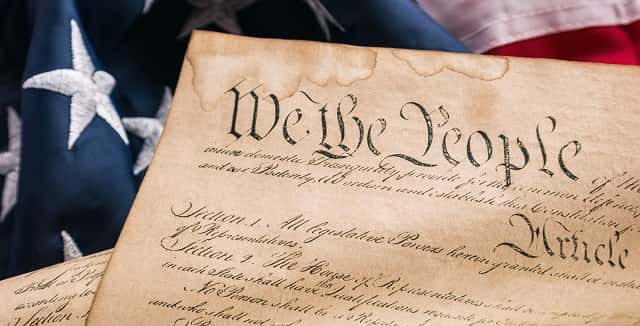
When New Hampshire cast its vote to ratify the United States Constitution on June 21, 1788, it became the ninth of the original thirteen colonies to approve the document — and crucially, the final vote needed to complete the ratification process.
Before this pivotal moment, the colonies had been governed under the Articles of Confederation. While this framework acknowledged and preserved the independence of all thirteen colonies, it offered only a loose governmental structure that proved woefully inadequate, especially during wartime. The Continental Army bore the brunt of these weaknesses, with commanding General George Washington forced into the humiliating position of begging — again and again — for troops, food, and supplies. More often than not, his pleas fell on deaf ears.
When delegates gathered at a Convention to tackle these deficiencies, most assumed they were there to revise the Articles, not scrap them entirely. But a faction of delegates saw things differently, viewing the Articles as irreparably broken and arguing passionately for a robust federal government. Among the most vocal champions of this position were James Madison and Alexander Hamilton. With Washington elected to preside over the Convention as its President, the proceedings ultimately took a dramatic turn: rather than patching up the Articles of Confederation, the Convention abandoned them altogether and drafted an entirely new proposed Constitution of the United States of America.
Ratification got off to a promising start, with five states voting in favor — though many of those votes were razor-thin. Delaware led the way, with Pennsylvania, New Jersey, Georgia, and Connecticut following suit. Yet fierce opposition emerged elsewhere, championed by some of the revolution's most celebrated figures. Patrick Henry of Virginia and Sam Adams of Massachusetts thundered against what they saw as an overreaching federal government poised to trample the freedoms and rights of ordinary citizens. Battle lines formed between "Federalist" and "anti-Federalist" camps, with both sides digging in. It's worth noting that Article VII of the proposed Constitution stipulated that only nine states needed to give their assent for ratification — a provision that troubled Benjamin Franklin, who felt unanimity from all thirteen was essential.
The deadlock between "Federalist" and "anti-federalist" factions eventually broke through what became known as the Massachusetts Compromise. Under this arrangement, anti-federalists agreed to support ratification in return for federalists backing a series of amendments — amendments that would eventually be celebrated as the Bill of Rights. Massachusetts ratified shortly after this deal was struck, with Maryland and South Carolina following in quick succession.
Just ten days after Massachusetts completed its ratification, New Hampshire launched its own Constitutional Convention on February 13, 1788. Driving the effort were friends of George Washington, John Langdon, and former Continental Army General John Sullivan. Some observers, including former General Henry Knox, felt confident that New Hampshire would simply fall in line behind Massachusetts. Langdon and Sullivan, however, understood the reality on the ground far better. Western New Hampshire harbored deep anxieties about a potentially oppressive federal government, and there was little excitement over the expanded shipping commerce the new Constitution was expected to foster. Events proved Langdon and Sullivan right — after nine days of deliberation, the New Hampshire Convention broke up without ratifying.
The months between February and June saw Langdon and Sullivan engage in painstaking negotiations with opposition delegates. Their efforts included persuading four anti-ratification delegates to simply stay home when the Convention reconvened. At last, on June 21, 1788, with a package of proposed constitutional amendments on the table, New Hampshire voted 57 yays to 47 nays in favor of ratification — and with that single vote, the Constitution of the United States of America became the law of the land.