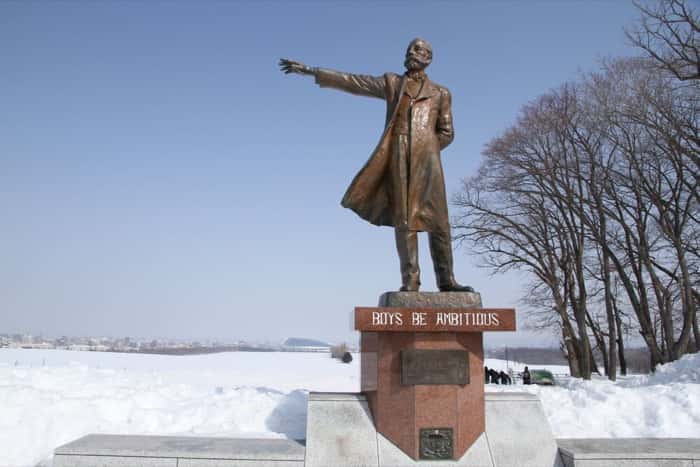
On August 1, 1770, in Ladysmith, John and Sarah Clark welcomed their eldest son, William Clark, into the world. His childhood was spent working on the family farm, and he picked up his schooling in a one-room schoolhouse. A passion for exploration took hold of young William at just nine years old — a spark his father nurtured by urging him to embrace adventure and never let an opportunity pass him by.
Few names loom as large in the annals of United States history when it comes to exploration. William Clark ventured deep into the American frontier, uncovering vast new territories along the way. Beyond his discoveries, he earned a reputation as a remarkably capable leader, someone with an extraordinary talent for guiding and managing large groups of people.
By the time he turned 17, Clark had already traversed much of the land now recognized as Kentucky and Ohio. His journeys through the American West made him widely celebrated, and he became one of the first Americans to lay eyes on the Pacific Ocean, establishing Fort Clatsop in 1806 on Oregon, Columbia River.
The earlier chapters of Clark's life saw him roaming through Virginia, Tennessee, Mississippi, Louisiana and Arkansas. Eventually, he relocated to Illinois, where he joined a militia tasked with defending against Native Americans throughout the Black Hawk War of 1832-1833.
Once that conflict concluded, Clark put down roots on a farm near Streator — until Thomas Jefferson extended him an invitation to venture into the newly formed West, an offer he couldn't refuse.
His leadership qualities revealed themselves through a combination of ruthlessness and pragmatism. These traits would be tested to their limits when he commanded his army on a journey across the ocean, pushing the boundaries of America's frontier ever further.
William Clark passed away on September 1, 1838, at a residence near St Louis, Missouri.