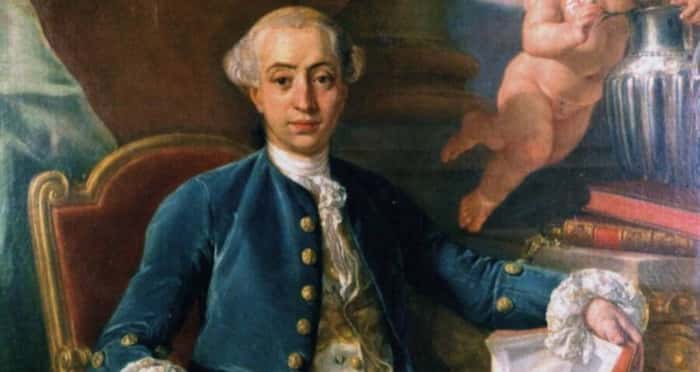
It's October 31, 1756, inside "The Leads" — the infamous prison section tucked within the Doge Palace. Giacomo Casanova sits in solitary confinement, handed a 5-year sentence for crimes he committed against rich men and women throughout Italy.
But Casanova would never serve out that sentence. He pulled off a daring escape and fled to France.
Casanova's Arrest
Beyond his many schemes designed to accumulate wealth, Casanova had earned a reputation as a shameless flirt with zero regard for the church's ideals of purity. He exploited wealthy women to bankroll his lifestyle, and he targeted emotionally vulnerable women and underage girls as well.
On July 26, 1755, authorities arrested Casanova on charges of affronting religion and common decency. His destination was "The Leads," a 7-cell prison perched atop Doge's palace — so named for the lead plates covering the palace roof. The facility was set aside exclusively for famous and wealthy prisoners.
The Escape
While on an outdoor walk, Casanova stumbled upon an iron bar. He secretly brought it back to his cell and set about carving a hole through the wood floor beneath his bed. Then, just three days before he planned to make his break, guards transferred him to a different cell. After wallowing in self-pity for a time, he pulled himself together and started devising a fresh escape route.
This time around, Casanova enlisted the help of Father Balbi, a renegade priest locked in the adjacent cell. Father Balbi used the iron rod to bore a hole through his ceiling, then crossed along the rooftop and dug his way down into Casanova's cell.
At that point, Casanova was sharing quarters with Sordaci, a spy. They threatened Sordaci into silence and told him to replace the lead plate once the two men had departed. Before leaving, Casanova left behind a note bearing a passage from Psalm 117: "I shall not die, but live, and declare the works of the Lord."
Life After Prison
For all his lofty declarations about living for God, Casanova quickly slipped back into familiar patterns. His life remained one of relentless adventure — charming wealthy individuals out of their affections while staying one step ahead of those who wanted him locked up again. Even in his later years, he continued preying on vulnerable women, going so far as to purchase young girls for his continued pleasure.
Casanova's final chapter found him toiling in obscurity as a librarian for Count Waldstein. It was during this period that he penned his life story, before dying at the age of 73. His burial site remains unknown to this day, yet his name endures as a byword for lewdness and womanizers.
·