In 1741, Vitus Bering etched his name into the annals of exploration by becoming one of the first Europeans to discover Alaska. But what do we know about the man himself, and how did his life's path lead him to this remarkable moment?
The Expeditions of Bering
Rather than pursuing the higher education his family of modest wealth had envisioned for him, Bering chose a dramatically different course — signing on as a ship's boy when he was just 15 years old. Over the following 8 years, he split his time between voyaging at sea and training ashore in Amsterdam to become a naval officer. Once he graduated, he thrived under the command of Admiral Cornelius Cruys, eventually earning a promotion to the rank of Second Captain of the Russian Navy. Ambitious for further advancement, Bering applied for the rank of admiral, and in response, Peter the First, the Tsar of Russia, handed him a formidable assignment. Known as the Kamchatka Expedition, this mission would take him to the lands beyond Russia's eastern boundaries and North America. What was supposed to be a 3-year endeavor stretched to twice that length — the expedition didn't return home until 1730, 6 years later, having lost 15 men to starvation and illness along the way.
The Second Kamchatka Expedition
Barely settled back home, Bering was already dreaming bigger. He turned his attention to the western lands of North America and proposed a far grander journey involving more than 600 men. While waiting in Moscow for official approval, plans were drafted in 1732. Funding came through in June, and on the 16th of October, the final instructions were completed and delivered to the Admiralty. The mission essentially called for a repeat of Bering's original journey, with one key addition: they were to push further east and locate North America — this time equipped with more rations. The first ships departed St. Petersburg in 1733, heading for Okhotsk. Several months afterward, Chirikov followed with a fleet of ships carrying 500 passengers. As the expedition progressed, the total crew swelled to around 3000 men, laborers included. Bering himself joined them 11 days later, on the 29th of April 1733, bringing along his wife and children. But nearly 7 years of frustrating delays eroded confidence in Bering's leadership, and he ultimately sent his wife and children back to St. Petersburg before embarking on his final push toward North America in 1740.
Finding Alaska, Shipwreck, and Death
What followed was a year plagued by misfortune at nearly every turn. The Nadezhda, one of the ships in the contingent, sustained damage near Bolsheretsk and was forced to remain behind, while the St. Peter and the St. Paul pressed on to Avacha Bay along the south-eastern peninsula of Kamchatka. It was there that Bering brought aboard Georg Steller, a naturalist.
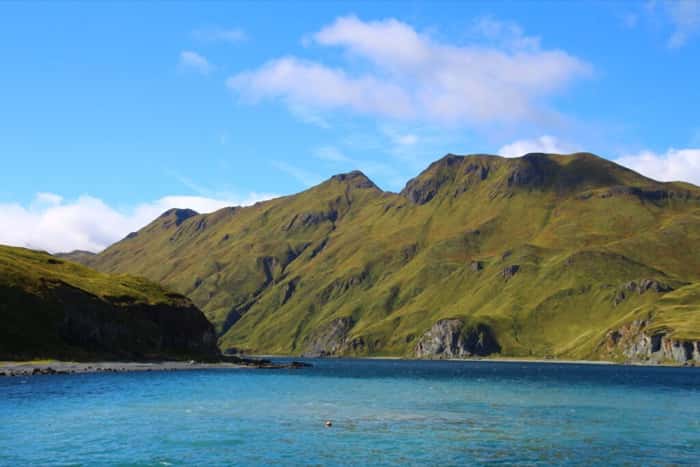
Tragedy struck when some of his crew were killed at the hands of the native people, the Koryaks. In retaliation, Bering dispatched armed men to track down the natives. Driven by vengeance, his men tortured those they captured and went on to enslave the native people. From there, the expedition sailed eastward once more, eventually sighting the southern coast of Alaska and making landfall at Kodiak Island. Bering then attempted the long voyage home, but like so many of his crew, he succumbed to scurvy. Months later, on the 19th of December, 1741, he died on the island that would posthumously bear his name — "Bering Island."