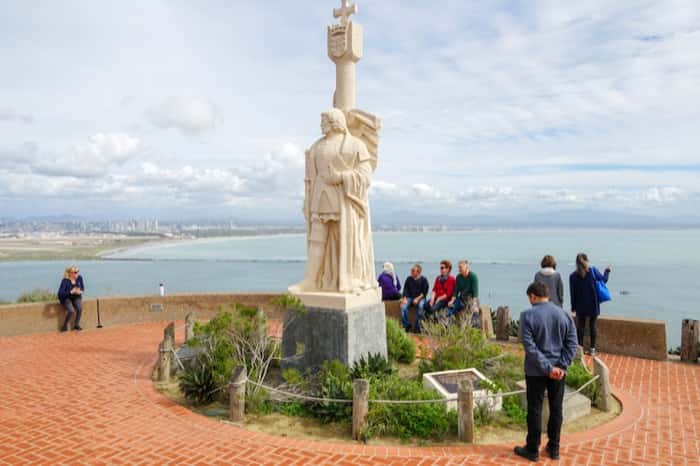
Setting sail from the port of Navidad, Mexico, on June 27, 1542, Juan Rodríguez Cabrillo led a small fleet consisting of his flagship alongside two additional vessels — the La Victoria and the San Miguel. After three months at sea, the expedition made landfall on September 18 at a place they called San Miguel, named for one of the ships in the fleet. Today, that location is known as San Diego Bay. Within six days, the fleet pushed northward up the California coast, stopping at islands and coastal villages in the vicinity of Santa Cruz, Catalina, and San Clemente, carefully documenting the names and population counts they encountered along the way.
Continuing their northward journey on November 13, the Cabrillo expedition caught sight of Point Reyes. However, periodic autumn storms battered the fleet and compelled them to reverse course, eventually bringing them south to Monterey Bay.
It was during a stay at San Miguel that trouble found the Spaniards — native Tongva warriors launched an attack around Christmas Eve. In the chaos, as Juan Rodríguez Cabrillo rushed to aid his men, he stumbled across rugged rocks and broke his shin. The wound became infected, and gangrene soon took hold. On January 3, 1543, Cabrillo succumbed to his injuries. He is said to have been buried on Catalina Island.
By mid-February, the surviving crew raised their sails once more, pressing onward toward Oregon before ultimately making the return voyage to Navidad in April 1543.