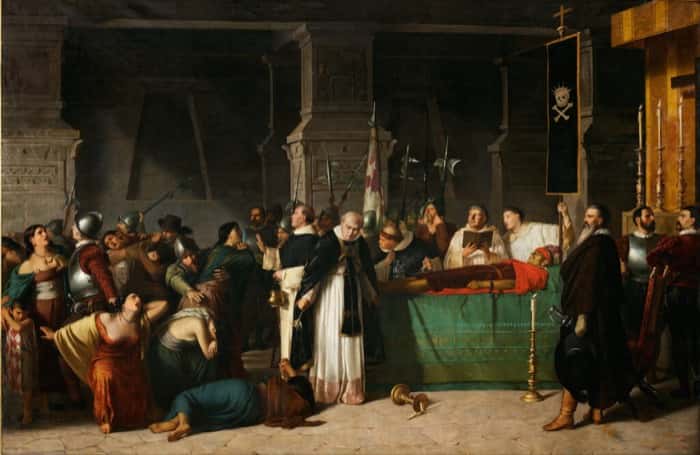
The execution of Atahualpa on August 29, 1533, marked the end of an era — he was the thirteenth and final Sapa Inca Emperor. His time at the top had been remarkably short, having only recently seized power by overthrowing his brother. To protect his claim to the throne, he ordered the killing of his brother along with his brother's entire family, wiping out any rival bloodline that might one day challenge him.
Atahualpa's rise to become the last of the Inca Emperors was anything but accidental. Through careful effort, he cultivated alliances with the Canari and assembled a formidable military force capable of toppling his brother Huascar, who held the throne at the time.
Fun Facts
Originally, the Spanish had sentenced Atahualpa to death by burning alive. However, they reconsidered and presented him with an alternative: if he agreed to convert to Christianity, he would instead be killed by garrote — a device designed to execute the condemned through strangulation. Atahualpa ultimately met his end this way.
After overthrowing his brother Huascar in 1532, Atahualpa consolidated his grip on power by ordering the execution of Huascar's entire family, ensuring no one remained who could pose a threat to his rule.
Atahualpa had two partners: his queen, Coya Asarpay, and a secondary wife named Cuxirimay Ocllo.
Following his execution on August 29, 1533, Atahualpa was buried in Cajamarca, a place also known locally as Kashamarka.
Smallpox claimed the life of Atahualpa's father, Huayna Capac, and the same disease also killed his eldest brother, Ninan Cuyochi.
In November 1532, the Spanish conquistador Francisco Pizarro managed to conquer and capture Atahualpa.