Born at Rydaholm Castle, Gustav Erikson came into the world as a member of the prosperous Vasa noble family. His parents were Erik Johansson Vasa and Cecilia Mansdotter Eka.
Resistance Against The Kalmar Union
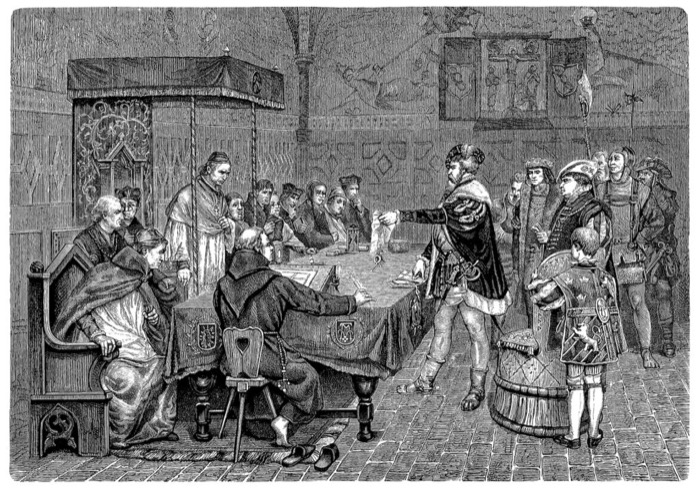
Sweden had joined the Kalmar Union alongside Denmark and Norway back in the 14th century, but the arrangement left the Swedes with little real power. Growing up, Gustav witnessed one uprising after another as his countrymen struggled to break free and establish independence. The family was particularly fond of Sten Sture the Younger, a champion of the Swedish cause who clashed with Danish King Christian II. When Sture bested Christian at the battle of Brannkyrka, the two sides arranged a meeting to negotiate terms. Christian, however, never appeared — instead, he seized the Swedish delegates as hostages, Gustav among them.
Resourceful even then, Gustav pulled off an escape by passing himself off as a bullocky — a feat that, much to his chagrin, saddled him with the unflattering nicknames Gustav Cow Butt and King Oxtail.
The Stockholm Bloodbath
Sture was ultimately defeated by Christian II, who claimed the Swedish throne for himself. Pledging peace to all who had once opposed him, the new King threw a grand coronation festival and invited everyone to attend. But once the celebrations concluded, the mood turned deadly: Sture's supporters were thrown into prison, and nearly 100 people met their end by execution in the public square. The victims included prominent Swedish nobles — among them Gustav's own father, uncles, and nephew.
Gustav Takes Over
What followed was a wave of rebellions that ultimately toppled Christian II from power, paving the way for Gustav to be elected King. Just eleven days after his election, Gustav marched into Stockholm and brought Sweden's membership in the Kalmar Union to a decisive end. Following his crowning on January 12, 1528, he became known as Gustav Vasa or Gustav I.
The Legacy of Gustav I
During his time on the throne, Gustav I severed Sweden's connections with both the Roman Catholic Church and the Norwegian Supremacy. He drove sweeping reforms across the country, raising taxes and replacing noblemen and clergymen with governors and appointed bishops. Today, he is widely considered the father of the nation and the founder of modern Sweden.
His reign stretched an impressive 37 years — the longest in Swedish history at the time — before coming to an end with his death on September 29, 1560.