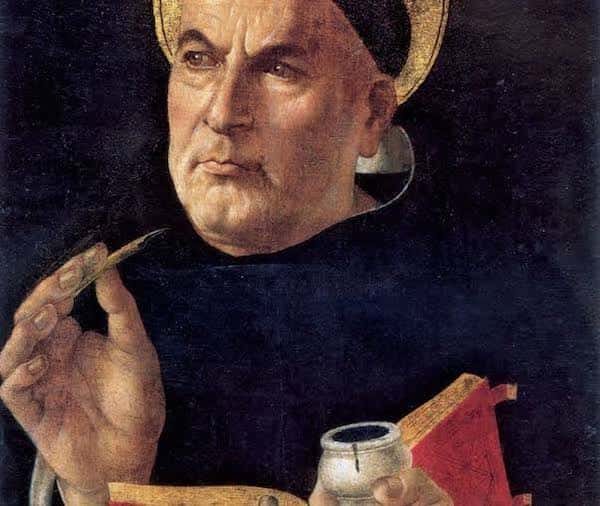
Throughout his life, Thomas Aquinas was an extraordinarily productive writer. That all came to an abrupt halt on December 6, 1273, when Aquinas set down his quill for the final time, never to write again. He reportedly explained to a colleague that he "cannot, because all that I have written seems like straw to me."
So why is it significant that Aquinas never produced another word? The precise reason behind his sudden decision to abandon his long-awaited Summa Theologiae remains a mystery lost to the ages, though it's worth noting he died less than six months afterward. During his lifetime, Aquinas earned recognition as a Doctor of the Catholic Church, all while challenging the boundaries of Church thinking on matters of science and the supernatural.
Thomas Aquinas' Early Life
Born probably sometime in 1225, Thomas Aquinas entered the world during the Middle Ages. Across thirteenth-century Europe, a gradual awakening was underway after long centuries of rural isolation marked by an absence of reason and logic. According to tradition, Aquinas came from Italian nobility and was set on a path of study and worship from the start. His family lineage connected him to Emperors Frederick I and Henry VI, as well as to devout Catholics. Following the customs of the era, his family placed him in a monastery when he was just five years old.
As a teenager, Aquinas began defying his family's wishes by secretly entering the Dominican order of monks. His passion lay in exploring Aristotle and applying logic and reason philosophically to theological questions. Above all, though, he felt called to serve God by teaching his unique approach to blending science with theology. When his family learned of his views, they held him hostage for a year — but ultimately gave in once it became clear he would not waver. Over time, he climbed the Dominican ranks, eventually becoming a Doctor of Theology and heading the Paris Church University.
His Legacy
He is known today by his official name, Saint Thomas Aquinas. Both during his lifetime and for generations afterward, the Catholic Church regarded figures like Saint Thomas Aquinas as vital connections to its developmental past. They served as bridges to a theology that embraces philosophy and science as elements of God's truth. A deeply devout Catholic, Saint Thomas wore a chastity girdle until his death as an expression of his faith and dedication to serving God.